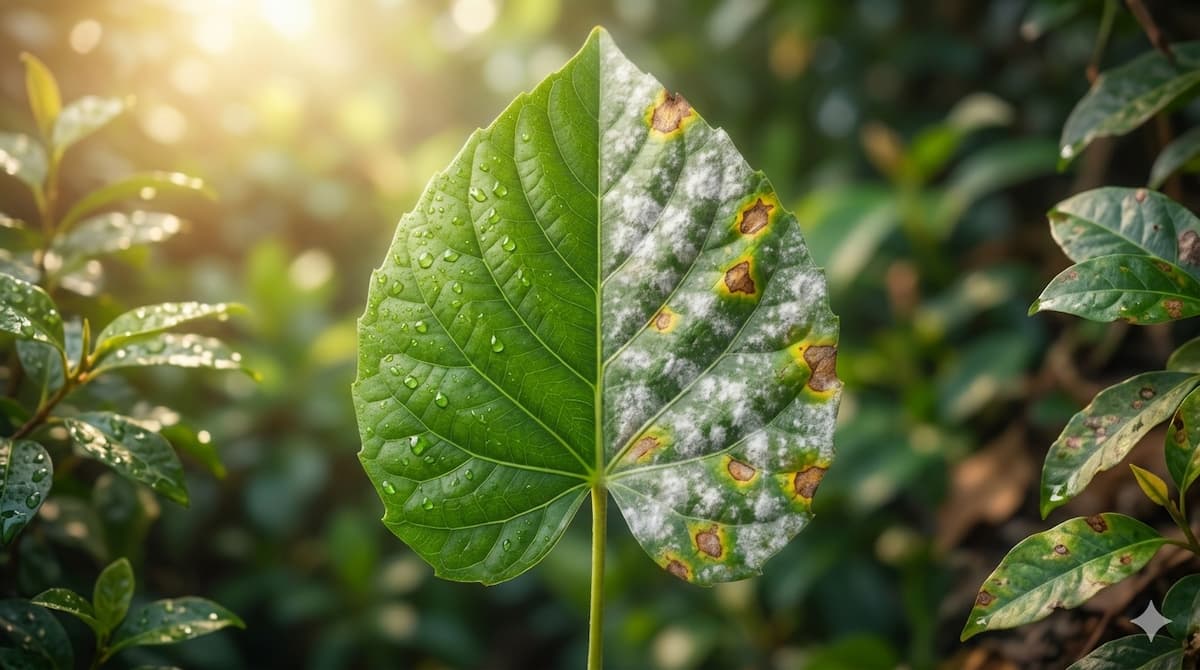
TL;DR: How to quickly identify fungal diseases in Indian gardens
Most fungal problems on Indian garden plants are Powdery Mildew (white powder), Downy Mildew (yellow patches with a fuzzy underside), or Leaf Spot (brown spots with a yellow halo). Identifying the correct disease pattern is crucial. You can save your plants by combining proper airflow with targeted fungicides like UPL SAAF or Indofil M-45, applied at the correct stages of infection.
What are the most common fungal diseases on Indian garden plants?
In Indian home gardens and balconies, fungal diseases are the second biggest cause of plant death after improper watering. Warm days, cool nights, and high humidity—especially during the monsoon season—create perfect conditions for fungal spores to germinate and spread rapidly.
Golden Rule of Fungal Prevention: Fungi thrive when relative humidity stays above 70% and leaves remain wet for many hours (due to overnight dew, rain, or late watering). Watering at the soil level in the morning is your easiest preventive measure.
The three most common fungal disease patterns you will encounter are:
- Powdery Mildew: Fine, flour-like white powder on upper leaf surfaces.
- Downy Mildew: Yellow, angular patches on the top of the leaf with fuzzy grey or purplish mold underneath.
- Leaf Spot (Cercospora / Alternaria): Brown or black spots surrounded by a distinct yellow halo, sometimes leaving empty “shot holes”.
How can you identify Powdery Mildew on roses, hibiscus, and bhindi?
Powdery Mildew is typically the first serious fungus problem new gardeners face. It distinctly prefers dry leaves, good light, and slightly humid air—conditions very common in Indian balcony setups.
Visual signs of Powdery Mildew:
- Fine white or grey powder distributed on upper leaf surfaces, appearing like dusted flour.
- Affected leaves may curl slightly and become physically distorted.
- Newer, tender leaves and flower buds are predominantly hit first.
- In severe cases, foliage turns yellow, completely dries out, and drops prematurely.
Step-by-step treatment for Powdery Mildew:
- Remove heavily infected leaves immediately and dispose of them in a sealed trash bag.
- Improve airflow by spacing pots wider apart and performing light strategic pruning.
- Switch to morning watering directly at the soil level so the plant foliage dries quickly in the sun.
- Apply a systemic fungicide if the white powder is spreading uncontrollably across multiple host plants.
Why does Downy Mildew appear on palak and cucurbits?
While Downy Mildew is a close relative of Powdery Mildew, its visual symptoms and environmental triggers are distinctly different. The disease moves aggressively fast when nights are cool and leaves stay wet for prolonged periods.
Visual signs of Downy Mildew:
- Yellow or light-green patches form on the upper leaf side. These patches are often highly angular because they are trapped by the plant’s internal veins.
- Fuzzy grey, whitish, or purplish mold grows directly beneath those yellow patches on the underside of the leaf.
- Left unchecked, affected leaves rapidly turn muddy brown and collapse entirely.
How do you recognize Leaf Spot on tulsi and money plants?
Leaf Spot diseases, most frequently caused by Cercospora and Alternaria fungal pathogens, slowly consume the leaf area, weaken the plant’s photosynthesis, and trigger widespread leaf yellowing and dropping. They are heavily prevalent during the humid Indian monsoon.
Visual signs of Leaf Spot:
- Multiple small brown, black, or dark purple spots scattered indiscriminately on the foliage.
- A distinctive yellow or light-green halo ringing each dark fungal spot.
- In advanced infections, the dead tissue in the center of the spot falls out naturally, leaving empty “shot holes” across the leaf.
- The infection pattern typically begins on older, lower leaves and climbs upwards towards new growth.
Powdery Mildew vs Downy Mildew vs Leaf Spot: What is the difference?
Use this diagnostic table as your rapid identification guide the moment you spot damaged foliage:
| Disease Type | Key Visual Sign | Common Indian Host Plants | Typical Weather Triggers |
|---|---|---|---|
| Powdery Mildew | White, flour-like powder on leaf surface | Rose, hibiscus, bhindi, gourds | Warm days, cool humid nights |
| Downy Mildew | Yellow patch on top, fuzzy mold underside | Palak, cucurbits, brassicas | Cool nights, prolonged leaf wetness |
| Leaf Spot | Brown spots with a yellow halo, shot holes | Tulsi, money plant, climbing creepers | High humidity, monsoon, crowded pots |
When should you use fungicides like UPL SAAF and Indofil M-45?
While proper pruning, spacing, and soil-level watering act as your first line of defense, applying targeted chemical treatments is medically essential once a fungal infection begins actively spreading to secondary leaves.
UPL SAAF (Carbendazim 12% + Mancozeb 63% WP)
UPL SAAF combines a systemic fungicide (Carbendazim) with a contact fungicide (Mancozeb). This powerful dual-action approach means it operates as both a curative and a protective solution:
- The systemic component transports inside the leaf tissue to severely halt existing fungal growth.
- The contact component acts as an external chemical shield, stopping new fungal spores from successfully germinating on the surface.
- Highly recommended for treating active Powdery Mildew and Leaf Spot on roses, hibiscus, and tomatoes (Mix 2 grams per 1 litre of clean water).
Buy UPL SAAF (Carbendazim 12% + Mancozeb 63% WP)
INDOFIL M 45 (Mancozeb 75% WP)
Indofil M-45 is a broad-spectrum, contact-only agricultural fungicide that provides excellent surface-level protection.
- Performs best as a preventive shield applied before diseases reach severe, visible levels.
- Highly effective for stopping Downy Mildew, early-stage Leaf Spot, and acting as a generalized monsoon protectant for vegetable crops (Mix 2–3 grams per 1 litre of water).
Buy INDOFIL M 45 (MANCOZEB 75% WP)
Essential Fungicide Safety Protocols:
- Always wear basic Personal Protective Equipment (PPE) including gloves, a protective mask, and closed shoes when mixing and spraying agricultural chemicals.
- Never spray against the wind or during strong gusts to avoid chemical inhalation and environmental drift.
- Keep children and household pets away from the treated area until the plant foliage is 100% dry.
- Store all fungicidal products securely in their original, clearly labeled packaging in a cool, dry place strictly out of reach of children.
- Do not dispose of leftover fungicide suspensions into drains, municipal ponds, or local water sources.
Final Decision Flow: What should you do right now?
- Identify the exact pattern: Look for white surface powder (Powdery Mildew), fuzzy undersides (Downy Mildew), or brown spots with halos (Leaf Spot).
- Implement cultural fixes: Immediately pluck off severely infected leaves and optimize pot spacing for airflow.
- Select your treatment: Apply UPL SAAF for active infections, or employ Indofil M-45 as a preventive shield against high humidity.
- Maintain a schedule: Spray uniformly every 10–15 days during high-risk monsoon periods to break the fungal life cycle.