Tag: Aries Plantomycin

  • Aries Plantomycin: The Plant Antibiotic Every Indian Gardener Needs Against Bacterial Disease

    TL;DR — When to Reach for Aries Plantomycin

    • Aries Plantomycin is a plant antibiotic combining Streptomycin Sulphate 9% and Tetracycline Hydrochloride 1% — engineered specifically for bacterial plant diseases.
    • Use it when plants show sudden wilting despite moist soil, greasy water-soaked leaf spots, or stem ooze — classic signs of bacterial (not fungal) infection.
    • It is not a fungicide. For powdery mildew, downy mildew, or fungal leaf spots, use UPL SAAF or Indofil M-45 (Mancozeb 75% WP) instead.
    • Works best at early infection stage, at 0.5–1 g per litre of water, repeated every 7–10 days.
    • Pair with TATA Blitox (Copper Oxychloride 50% WP) for a systemic + surface dual-action strategy against both bacterial and fungal threats.

    What Exactly Is Aries Plantomycin and How Is It Different From a Fungicide?

    Walk into any agro-input shop in India and you’ll find shelves full of fungicides — Mancozeb, Carbendazim, Propiconazole. But when your tomato plant collapses overnight despite wet soil, none of those will help. That’s because you’re fighting a bacterial pathogen, not a fungus. Aries Plantomycin is formulated for exactly this situation.

    Manufactured by Aries Agro Limited, Plantomycin is a broad-spectrum plant bactericide in water-soluble powder form. It contains two complementary antibiotic active ingredients that work together to suppress bacterial growth inside plant tissue:

    • Streptomycin Sulphate (9%) — An aminoglycoside antibiotic that binds to the bacterial 30S ribosomal subunit, halting protein synthesis and reproduction of pathogenic bacteria like Ralstonia solanacearum and Xanthomonas spp.
    • Tetracycline Hydrochloride (1%) — A broad-spectrum bacteriostatic antibiotic that further inhibits bacterial protein production through a complementary mechanism, enhancing the overall efficacy of the formulation.

    The dual-antibiotic formula attacks bacterial pathogens through two pathways simultaneously, making resistance development significantly harder compared to a single active ingredient product.

    Buy Aries Plantomycin (Streptomycin + Tetracycline)

    Which Bacterial Diseases Does Aries Plantomycin Treat?

    Aries Plantomycin is registered and recommended for a range of bacterial plant diseases that are particularly common in India’s warm, humid climate. Below is a reference guide to match symptoms to use cases:

    Disease Affected Crops Key Symptom Plantomycin Effective?
    Bacterial Wilt (Ralstonia solanacearum) Tomato, Brinjal, Chilli, Potato Sudden wilt despite moist soil; milky stem ooze in water ✅ Yes — use at first sign
    Bacterial Blight (Xanthomonas spp.) Tomato, Chilli, Cabbage, Bean Angular, greasy/water-soaked leaf spots turning brown-black ✅ Yes — spray early
    Black Rot (Xanthomonas campestris) Cabbage, Cauliflower, Broccoli V-shaped yellow lesions from leaf margins; blackened veins ✅ Yes — most effective early
    Bacterial Canker (Clavibacter michiganensis) Tomato, Fruit trees Dark sunken lesions on stems/fruit; gumming from bark ✅ Yes — combine with pruning
    Bacterial Leaf Spots Ornamentals, vegetables Small, water-soaked spots with yellow halos ✅ Yes — preventive + curative
    Powdery / Downy Mildew Any crop White powder or grey-purple fuzz on leaves ❌ No — use a fungicide instead
    Fungal Leaf Spots (Alternaria, Cercospora) Any crop Circular/oval brown spots, often with concentric rings ❌ No — use Mancozeb or SAAF
    🔍 Bacterial vs. Fungal: The Fastest Field Check

    Cut a wilting stem 5 cm above the base and suspend it in a glass of clear water. Watch for 60 seconds. A white, milky, thread-like ooze streaming from the cut end = bacterial wilt confirmed. A clean cut with no ooze = likely fungal or abiotic (watering, heat). This test takes under 2 minutes and determines whether you need Plantomycin or a fungicide.

    How Does Aries Plantomycin Work Inside the Plant?

    When Aries Plantomycin is applied as a foliar spray or soil drench, the water-soluble powder dissolves completely and the antibiotic molecules are absorbed through leaf stomata and stem tissue. Once inside the plant’s vascular system:

    1. Streptomycin Sulphate binds to bacterial ribosomes in the vascular tissue, stopping harmful bacteria like Ralstonia solanacearum from producing the proteins they need to multiply and colonise the plant’s water-conducting xylem vessels.
    2. Tetracycline Hydrochloride provides a complementary bacteriostatic effect, slowing bacterial growth through a separate inhibition mechanism — leaving bacterial cells unable to reproduce even if the primary action is partially resisted.
    3. Healthier, uncolonised parts of the plant are protected from fresh infection as new growth emerges during the treatment window.

    Critically, Plantomycin is most effective when used at the early stage of infection — before the vascular system is fully blocked by bacterial colonisation. Once a plant has fully collapsed, chemical intervention cannot reverse the damage.

    How to Mix Aries Plantomycin for Your Garden Sprayer

    Aries Plantomycin is a fine, free-flowing water-soluble powder that dissolves completely without residue. Always check the current product label for the definitive rate, but the following general guideline applies to most home garden applications:

    • Standard foliar rate: 0.5–1 gram of Plantomycin per litre of water.
    • For a 15-litre knapsack sprayer: 7.5–15 grams per full tank.
    • For a 1-litre hand pump sprayer (common for balcony/terrace gardens): 0.5–1 gram per filled bottle.

    Step-by-Step Mixing Procedure

    1. Use a clean, dry sprayer tank or bucket — residues from previous chemicals can react or reduce efficacy.
    2. Add approximately one-third of the final water volume to the tank first.
    3. Measure the required quantity of Aries Plantomycin using a digital kitchen scale for accuracy.
    4. Add the powder gradually while stirring — it dissolves quickly with no clumping.
    5. If tank-mixing with TATA Blitox, add Blitox after Plantomycin is fully dissolved, then top up with water. Always do a small test mix (50 ml) to confirm compatibility before making a full tank.
    6. Fill the tank to the final volume and agitate well before spraying.
    ⏰ Spray Timing for Best Results

    Spray early morning (before 9 AM) or in the evening (after 5 PM) when temperatures are below 30°C and wind is calm. Spraying in mid-day summer heat above 35°C can cause leaf burn (phytotoxicity) and reduces absorption. Avoid spraying if rain is forecast within 4 hours — rain will wash off the product before absorption.

    How to Apply Aries Plantomycin on Garden Plants: Full Application Guide

    Proper application technique matters as much as dosage. Follow this sequence for maximum effectiveness:

    1. Remove and destroy severely infected material first.
      Pull out fully collapsed plants. Cut and bag heavily blighted leaves. Never compost infected plant material — this re-seeds the pathogen into your soil. Dispose in a sealed bag or burn if local rules permit.
    2. Disinfect your tools.
      Dip pruning shears and knives in a solution of 10% household bleach (sodium hypochlorite) between cuts. A single contaminated blade can carry Ralstonia solanacearum to 10+ healthy plants.
    3. Spray all plant surfaces thoroughly.
      Cover leaf tops, leaf undersides (where bacteria often enter through stomata), stems, and the soil surface around the plant base for soilborne pathogens.
    4. Repeat at 7–10 day intervals.
      Continue spraying until new growth appears healthy and no new lesions develop. Do not exceed the maximum number of applications stated on the product label per season.
    5. Follow up with cultural corrections.
      Switch to base watering (drip or pour at the root zone, not overhead). Improve soil drainage if waterlogging is present — saturated soil accelerates bacterial spread.

    Real-World Use Cases in Indian Home Gardens

    🍅 Tomato & Chilli — Bacterial Wilt and Blight

    Symptoms: Tomato plants wilt dramatically during the afternoon despite adequate soil moisture. Some plants recover at night but wilt again the next morning before collapsing fully within 3–5 days. Chilli shows angular, greasy leaf spots.
    Action: Remove fully collapsed tomato plants immediately. Begin Plantomycin sprays (0.5–1 g/L) on surviving plants every 7 days. Combine with TATA Blitox for surface protection. Avoid overhead irrigation.

    🥦 Cabbage & Cauliflower — Black Rot

    Symptoms: V-shaped yellow lesions starting from leaf margins, with dark blackened veins inside the leaf. Affects crucifers (cabbage, cauliflower, broccoli) heavily during humid monsoon conditions.
    Action: Remove affected outer leaves. Spray Plantomycin at 7–10 day intervals from first symptom appearance. Rotate cabbage family crops to a different bed the following season.

    🌳 Fruit Trees — Canker and Gummosis

    Symptoms: Dark, sunken, cracked lesions appear on branches or the bark of mango, guava, or citrus trees, sometimes with gum oozing from the wound.
    Action: Prune affected branches at least 15 cm below the visible lesion, sterilising tools between every cut. Apply multiple cover sprays of Plantomycin as per label dosage. Paste the pruning wounds with a copper-paste or Blitox slurry.

    Buy Aries Plantomycin (Streptomycin + Tetracycline)
    Buy TATA Blitox (Copper Oxychloride 50% WP)

    When Should You NOT Use Aries Plantomycin?

    Knowing when not to use a product is as important as knowing when to use it. Misapplication of plant antibiotics wastes money, risks phytotoxicity, and contributes to antibiotic resistance in soil ecosystems.

    • Do not use for fungal diseases. If you see white powder, grey fuzz, concentric-ring spots, or classic powdery mildew — reach for a fungicide like UPL SAAF (Carbendazim 12% + Mancozeb 63% WP) or Indofil M-45 (Mancozeb 75% WP) instead. Plantomycin will have no effect on fungal pathogens.
    • Do not use on a fully dead plant. If the stem has rotted at the base and the entire plant is collapsed, antibiotic treatment cannot reverse the damage. Remove the plant and treat the soil.
    • Do not use as a “routine” preventive spray. Reserve Plantomycin for when bacterial disease is confirmed or strongly suspected. Routine antibiotic spraying encourages antibiotic resistance in soil bacteria.
    • Do not spray on actively flowering plants where bees or other pollinators are foraging — antibiotic residues can affect beneficial insects.
    • Do not use close to harvest without confirming the pre-harvest interval (PHI) on the current product label.

    Safety and Responsible Use of Aries Plantomycin

    ⚠️ Safety Protocols — Read Before Mixing or Spraying

    • PPE: Wear waterproof chemical-resistant gloves, a P2/N95 face mask or respirator, safety goggles, and full-length clothing when mixing and applying. Wash all exposed skin thoroughly with soap and water after use.
    • Ventilation: Mix and apply only in open, outdoor areas with good natural airflow. Never prepare spray solutions indoors or in poorly ventilated sheds.
    • Pet & children safety: Keep children, pets, and livestock out of the treated area for a minimum of 24–48 hours post-spray, or until all foliage is visibly dry.
    • Pre-harvest interval (PHI): Strictly observe the PHI printed on the product label before harvesting and consuming any treated crop. PHI varies by crop — check the label for your specific vegetable or fruit.
    • Antibiotic stewardship: Streptomycin and Tetracycline are regulated antibiotic classes. Overuse in agriculture contributes to antibiotic resistance in soil microbiomes. Use only when bacterial infection is confirmed, at label-specified doses and intervals. Do not increase dose or shorten intervals to “get faster results.”
    • Storage: Store in original sealed packaging in a cool, dry place away from direct sunlight, food, and drinking water. Keep out of reach of children.
    • Sprayer disposal: Triple-rinse the sprayer after use and dispose of rinse water away from drains, water bodies, and vegetable beds.

    Frequently Asked Questions About Aries Plantomycin

    What is Aries Plantomycin used for in gardens?

    Aries Plantomycin is used to treat bacterial plant diseases including bacterial wilt (caused by Ralstonia solanacearum), bacterial blight (Xanthomonas spp.), black rot in crucifers, and bacterial canker in fruit trees. It contains Streptomycin Sulphate 9% and Tetracycline Hydrochloride 1% in a water-soluble powder formulation that is absorbed into plant vascular tissue to suppress bacterial growth.

    How much Aries Plantomycin should I use per litre of water?

    The standard home garden rate is 0.5 to 1 gram per litre of water, depending on disease severity and the specific crop being treated. For a 15-litre knapsack sprayer, this equals 7.5–15 grams per full tank. Always verify against the current product label, as formulations can change between batches.

    Can I mix Aries Plantomycin with TATA Blitox in one tank?

    The combination of Aries Plantomycin and TATA Blitox (Copper Oxychloride 50% WP) is a widely recommended dual-action strategy — Plantomycin targets bacteria systemically inside the plant while Blitox creates a protective copper barrier on leaf surfaces. Before making a full-tank mix, always conduct a small compatibility test (50 ml of each at label dose) — if the solution remains uniform without separation or precipitation, it is safe to proceed.

    Will Aries Plantomycin work on powdery mildew or fungal leaf spots?

    No. Aries Plantomycin has no antifungal activity. It is specifically formulated for bacterial pathogens. For powdery mildew, downy mildew, or fungal leaf spots (Alternaria, Cercospora), use a registered fungicide such as UPL SAAF (Carbendazim + Mancozeb) or Indofil M-45 (Mancozeb 75% WP). Applying Plantomycin to a fungal disease will waste the product and allow the fungal infection to progress unchecked.

    How often should I spray Aries Plantomycin?

    Spray at 7–10 day intervals during active disease pressure, continuing until new plant growth is healthy and no new lesions are appearing. Do not exceed the maximum number of applications specified on the product label per crop season. Between sprays, focus on cultural corrections — reduce overhead watering, improve drainage, and remove infected plant material.

    Conclusion: Why Aries Plantomycin Belongs in Every Serious Indian Home Garden

    Most home gardeners in India have a bottle of SAAF and a packet of Mancozeb — and for fungal diseases, those choices are correct. But the moment a tomato plant wilts overnight, a chilli stem starts oozing, or a cabbage develops blackened V-shaped lesions, a fungicide is the wrong tool entirely. That gap in the Indian home gardener’s toolkit is precisely what Aries Plantomycin (Streptomycin Sulphate 9% + Tetracycline Hydrochloride 1%) fills.

    Used correctly — at the right stage, right dose, and in combination with TATA Blitox for surface protection and good cultural hygiene — it can salvage crops that would otherwise collapse within days. Kept in reserve for confirmed bacterial disease and rotated responsibly to prevent resistance, it is one of the most impactful additions to a serious gardener’s plant protection arsenal.

    Buy Aries Plantomycin (Streptomycin + Tetracycline)
    Buy TATA Blitox (Copper Oxychloride 50% WP)
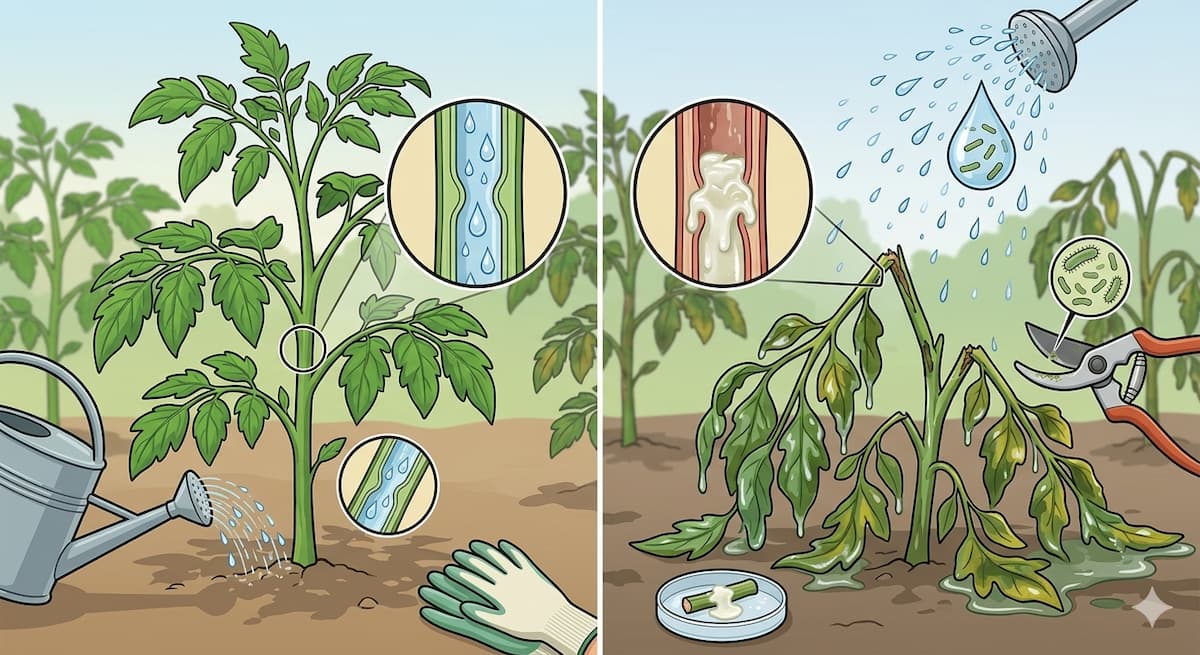
  • Bacterial Wilt & Blight: The Silent Garden Killers in Indian Home Gardens

    Bacterial Wilt & Blight: The Silent Garden Killers in Indian Home Gardens

    TL;DR — When Healthy Plants Suddenly Collapse

    • If your tomato, chilli, or brinjal wilts even though the soil is moist, you’re likely dealing with bacterial wilt or blight — not a fungal disease.
    • Standard fungicides (SAAF, Indofil M-45) do not work against bacterial pathogens.
    • You need plant antibiotics — specifically Aries Plantomycin (Streptomycin Sulphate 9% + Tetracycline Hydrochloride 1%), ideally combined with TATA Blitox (Copper Oxychloride 50% WP) for surface protection.
    • Act fast: bacterial wilt can kill a healthy plant within 3–5 days in warm, humid Indian summers.
    • Combine chemical intervention with hygiene and crop rotation for lasting control.

    What Is the Difference Between Fungal and Bacterial Plant Diseases?

    Most Indian home gardeners reach for a fungicide the moment they see their plants suffer — but bacterial diseases require an entirely different treatment approach. Understanding the distinction can save your crop before it’s too late.

    Fungal diseases (caused by pathogens like Alternaria, Cercospora, and downy/powdery mildews) typically produce spots, patches, or powdery coatings on leaves. They spread slowly via airborne spores and usually respond well to fungicides like Mancozeb or Carbendazim.

    Bacterial diseases, by contrast, cause wilting, water-soaked or greasy lesions, brown vascular discolouration in stems, and sometimes a sticky ooze when stems are cut. They spread through rain splash, contaminated tools, and infected seeds — and they can kill a previously healthy plant within days.

    Feature Fungal Diseases Bacterial Diseases
    Typical symptom Spots, patches, powdery growth, slow onset Sudden wilt, greasy/water-soaked lesions, stem ooze
    Affected tissue Leaf surface, older leaves first Vascular system, can collapse entire plant
    Speed of damage Days to weeks Hours to days (3–5 days to plant death)
    Effective treatment Fungicides (SAAF, Indofil M-45, Mancozeb) Plant antibiotics + copper (Plantomycin + Blitox)
    Spreads via Airborne spores, wind, rain splash Splashing water, infected tools, infected seed
    Key prevention Fungicide schedule, good airflow Hygiene, crop rotation, resistant varieties

    What Does Bacterial Wilt Look Like on Tomato, Chilli, and Brinjal?

    Bacterial wilt — caused primarily by Ralstonia solanacearum — is one of the most destructive soilborne bacterial diseases in India. It thrives in warm, moist conditions, making Indian summers and monsoon seasons peak risk periods for home gardens.

    Classic Symptoms of Bacterial Wilt

    • Plants suddenly wilt during the day, even though soil moisture is adequate — this is the key diagnostic clue.
    • Wilting often begins on one side of the plant before spreading to the entire stem.
    • Leaves remain green initially but droop permanently and never recover after watering.
    • Cutting the stem reveals brown discolouration in the vascular tissue.
    • When a cut stem section is placed in clear water, a milky, thread-like bacterial ooze streams out — a definitive field test for bacterial wilt.
    💡 Quick Field Test for Bacterial Wilt

    Cut a stem 5 cm from the base and suspend the cut end in a glass of clear water. If you see white, thread-like streams after 30–60 seconds, Ralstonia solanacearum (bacterial wilt) is the likely cause. A clean, colourless cut indicates a different problem.

    What Does Bacterial Blight Look Like on Leaves?

    Bacterial blight affects a wide range of vegetable crops including tomato, chilli, cabbage, and bean. Unlike wilt, which destroys the plant from the inside out, blight first manifests on leaf surfaces and moves inward.

    Common Signs of Bacterial Blight

    • Angular, water-soaked (greasy-looking) lesions on the leaf surface — the angular shape is because lesions are bordered by leaf veins.
    • Spots initially appear translucent, then turn brown or black as tissue dies.
    • Lesions often progress along leaf edges and veins, giving a ragged appearance.
    • In severe cases, entire leaves or growing shoots blacken and die back.
    • On tomato and chilli, significant leaf loss reduces photosynthesis and can cut yields by 20–40% even without complete plant death.

    Why Don’t Fungicides Work Against Bacterial Diseases?

    Bacterial wilt and blight are caused by prokaryotic bacteria (Ralstonia solanacearum, Xanthomonas spp., Pseudomonas syringae), not by fungi. Fungicides are specifically formulated to inhibit fungal cell wall synthesis and reproduction — they have no mechanism of action against bacterial cells.

    Spraying Mancozeb, Carbendazim, or Propiconazole on a bacterial infection wastes money, delays effective treatment, and allows the bacteria to spread further. The correct answer is a plant antibiotic — and in India, the most accessible option is Aries Plantomycin.

    What Is Aries Plantomycin and How Does It Control Bacterial Disease?

    Aries Plantomycin is a broad-spectrum bactericide formulated as a water-soluble powder, combining two antibiotic active ingredients:

    • Streptomycin Sulphate — 9%: An aminoglycoside antibiotic that inhibits bacterial protein synthesis by binding to the 30S ribosomal subunit, preventing bacterial reproduction.
    • Tetracycline Hydrochloride — 1%: A broad-spectrum antibiotic that further disrupts bacterial protein production, providing a dual-action synergistic effect.

    Together, these two active ingredients attack bacterial plant diseases through two complementary pathways — making resistance development harder than with a single-mode product.

    Diseases Controlled by Aries Plantomycin

    • Bacterial wilt (caused by Ralstonia solanacearum)
    • Bacterial blight (caused by Xanthomonas spp.)
    • Black rot and bacterial canker
    • Bacterial leaf spots of various origins

    Buy Aries Plantomycin (Streptomycin + Tetracycline)

    Why Combine Aries Plantomycin with TATA Blitox?

    TATA Blitox (Copper Oxychloride 50% WP) is a surface-protective, broad-spectrum fungicide with proven bactericidal activity against pathogens on leaf surfaces. While Plantomycin works systemically inside the plant’s vascular tissue, Blitox creates a hostile copper shield on exposed leaf and stem surfaces, disrupting bacterial cell membranes before infection can penetrate.

    🌿 The Dual-Action Strategy

    • Aries Plantomycin — Systemic antibiotic action; targets bacteria that have already entered the plant’s vascular system.
    • TATA Blitox — Protective surface barrier; prevents new bacterial (and fungal) spores and cells from establishing on leaf and stem surfaces.
    • Together: broader spectrum, longer protection window, and better resistance management than either product alone.

    Buy TATA Blitox (Copper Oxychloride 50% WP)

    Step-by-Step Spray Routine for Bacterial Wilt and Blight

    The following schedule is a general guide for home gardeners. Always read and follow the dosage and interval printed on each product label — label instructions are legally mandatory and formulation-specific.

    1. Diagnose first. Confirm bacterial disease using the stem-ooze test (see info-box above) or by observing angular water-soaked lesions. Do not spray plant antibiotics if the disease appears fungal.
    2. Remove and destroy infected material immediately. Pull out severely wilted plants. Remove and bag heavily blighted leaves. Do not compost — dispose of plant material in a sealed bag or burn if permitted.
    3. At first confirmed bacterial symptoms: Mix Aries Plantomycin and TATA Blitox in water as per their respective label doses. Spray thoroughly on all plant surfaces — leaf tops, undersides, stems, and the soil around the base.
    4. Repeat every 7–10 days during active disease pressure or through the monsoon season.
    5. Do a test spray first if combining two products for the first time — apply to 2–3 plants and wait 48 hours to ensure no phytotoxicity before treating your entire garden.
    6. Avoid overhead watering in the evening. Wet foliage overnight is the fastest route to bacterial and fungal spread. Water at the base of plants in the morning when possible.

    Cultural Practices That Reduce Bacterial Disease — Chemicals Alone Are Not Enough

    Even the best plant antibiotic cannot compensate for poor cultural practices. In Indian kitchen gardens and small home plots, these four habits dramatically reduce recurring bacterial disease pressure:

    • Crop rotation: Avoid growing tomato, chilli, brinjal, or potato in the same bed for consecutive seasons. Ralstonia solanacearum can survive in soil for 2–3 years; rotating to non-solanaceous (unrelated) crops starves it of a host.
    • Resistant varieties: For tomato, varieties bred with bacterial wilt tolerance (such as Arka Rakshak and some hybrid lines from IIVR) are commercially available in Indian markets. Ask your local nursery for wilt-resistant options.
    • Tool hygiene: Disinfect pruners and knives between plants with a 10% bleach solution or 70% isopropyl alcohol. A single cut on an infected plant can transmit bacteria to 10 healthy ones.
    • Avoid working in the garden when leaves are wet: Handling plants during or after rain greatly increases mechanical spread of bacteria from plant to plant.
    📌 Golden Rule for Indian Home Gardeners

    If you are unsure whether the problem is fungal or bacterial, start with TATA Blitox (Copper Oxychloride 50% WP) first — it has both fungicidal and surface bactericidal activity. Monitor for 5–7 days. If wilting or oozing persists, add Aries Plantomycin to your spray programme for antibiotic action.

    Safety and Responsible Use of Plant Antibiotics in Home Gardens

    ⚠️ Safety & Responsible Use Guidelines

    • PPE: Always wear waterproof gloves, a face mask/respirator, and safety goggles when mixing and spraying. Avoid touching eyes or face during application.
    • Ventilation: Spray in open, well-ventilated outdoor areas. Do not spray in enclosed spaces or greenhouses without adequate airflow.
    • Pet & children safety: Keep children and pets away from the treated area for at least 24–48 hours post-spray, or until foliage is fully dry.
    • Pre-harvest interval: Do not spray close to harvest without confirming the pre-harvest interval (PHI) on the product label. Plantomycin and Blitox have specific PHI requirements for edible crops.
    • Resistance management: Do not exceed label-recommended doses or frequencies. Overuse of Streptomycin in agriculture has contributed to antibiotic resistance globally — use only when bacterial disease is confirmed.
    • Disposal: Rinse sprayers thoroughly after use. Never pour diluted spray solution into drains or water bodies.

    Frequently Asked Questions About Bacterial Wilt and Blight in Indian Gardens

    Can bacterial wilt in tomato be cured once the plant is fully wilted?

    No. Once a tomato plant has fully wilted due to Ralstonia solanacearum, the vascular system is irreversibly blocked and the plant cannot recover. The priority is to remove the infected plant immediately, treat the surrounding soil with a copper-based drench (TATA Blitox), and protect neighbouring healthy plants with Aries Plantomycin sprays. Early-stage intervention — when only one side or one stem shows symptoms — gives the best chance of saving adjacent plants.

    Is Aries Plantomycin safe for vegetables like tomato and chilli?

    Yes, when used at label-recommended dosages and respecting the pre-harvest interval (PHI) printed on the label, Aries Plantomycin (Streptomycin Sulphate 9% + Tetracycline Hydrochloride 1%) is registered for use on vegetable crops in India. Always test on a small area first and avoid spraying in extreme heat (above 35°C) to prevent phytotoxicity.

    What is the difference between bacterial wilt and water stress in tomato?

    Both conditions cause wilting, but water stress wilting recovers fully after irrigation within a few hours. Bacterial wilt does not recover even after thorough watering. Additionally, bacterial wilt often starts on one side of the plant or on individual branches, while heat/drought stress affects the entire plant uniformly. The definitive test is the stem ooze test described in this article.

    Can I use TATA Blitox alone to control bacterial blight?

    TATA Blitox (Copper Oxychloride 50% WP) has surface bactericidal activity and is effective for managing early or mild bacterial blight, especially on leaf surfaces. However, for confirmed bacterial wilt or systemic infections, Blitox alone is insufficient — Aries Plantomycin must be added for internal antibiotic action. Use Blitox as your protective baseline, and escalate to the combination if symptoms progress.

    How do bacteria spread in a home garden and how can I stop it?

    In home gardens, bacterial plant diseases spread primarily through: (1) rain splash and overhead watering carrying bacteria from infected to healthy leaves; (2) contaminated pruning tools used across multiple plants; (3) infected transplants or seeds brought in from outside; and (4) soilborne survival of pathogens like Ralstonia solanacearum for up to 3 years. Prevention requires tool disinfection with 10% bleach, avoiding evening overhead watering, and practising crop rotation.

    Conclusion: Act Fast, Use the Right Tools, and Prevent Recurrence

    Bacterial wilt and blight are among the most misdiagnosed and consequently mistreated diseases in Indian home gardens. Because they look similar to other problems — overwatering, fungal disease, heat stress — many gardeners lose entire crops while applying the wrong products.

    The key principles are simple: identify the disease correctly, remove affected plants quickly, and reach for Aries Plantomycin (Streptomycin Sulphate + Tetracycline Hydrochloride) combined with TATA Blitox (Copper Oxychloride 50% WP) at the first confirmed sign of bacterial infection. Pair chemical treatment with strict garden hygiene, crop rotation, and resistant varieties — and these “silent garden killers” can be managed effectively even in the challenging warm, humid climate of an Indian home garden.

    Buy Aries Plantomycin (Streptomycin + Tetracycline)
    Buy TATA Blitox (Copper Oxychloride 50% WP)