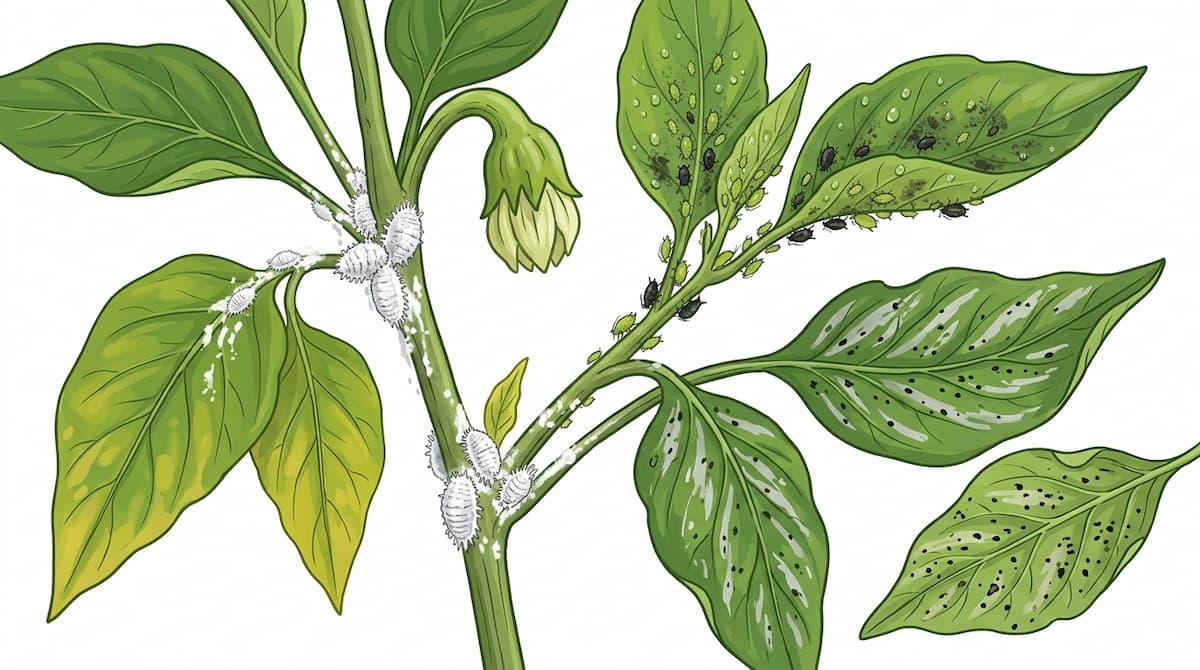
- If your hibiscus, lemon, or indoor plants have curled leaves, sticky surfaces (honeydew), and poor flowering, the most likely culprits are sap-sucking pests: mealybugs, aphids, or thrips.
- Each pest looks and behaves differently — correct identification determines whether a contact spray or a systemic insecticide will work.
- TATA Tafgor (Dimethoate 30% EC) is a systemic insecticide absorbed into plant sap — it reaches hidden pests that contact sprays miss entirely.
- Sentry (Lambda-Cyhalothrin) is a broad-spectrum contact insecticide useful for knocking down visible, mixed pest populations on ornamentals.
- Chemical control works best when combined with pruning, water-washing, and ant control — ants actively protect and spread mealybugs and aphids.
Why Are Sap-Sucking Pests the #1 Pest Problem in Indian Home Gardens?
India’s warm, humid climate — from coastal Maharashtra to the Gangetic plains — creates near-ideal breeding conditions for sap-sucking insects year-round. Unlike leaf-chewing caterpillars or borers that cause visible physical damage, sucking pests operate silently, draining plant energy from the inside out before most gardeners notice anything is wrong.
Three structural features of typical Indian home gardens make infestations worse:
- Dense, overlapping foliage in small balcony pots creates shelter, humidity, and physical bridges between plants.
- Nitrogen-rich fertilising habits produce the soft, lush new growth that mealybugs, aphids, and thrips prefer to feed on.
- Ants actively farm mealybug and aphid colonies — protecting them from natural predators and even physically transporting them to fresh plant parts — in exchange for the sweet honeydew these pests excrete.
The cumulative result: sticky leaves coated in black sooty mould, flower buds aborting before opening, yellowing and curling foliage, and — in heavy infestations — near-complete plant collapse.
How to Identify Mealybugs on Hibiscus, Crotons, and Indoor Plants
Mealybugs (Pseudococcus spp. and Planococcus citri) are among the most persistent garden pests in India, particularly on ornamental plants kept in partial shade.
Visual Signs of Mealybug Infestation
- White, cottony, waxy clusters at leaf axils (where the leaf meets the stem), along main stems, and sometimes on roots below the soil line.
- Sticky honeydew residue coating leaves and the pot surface below — often the first sign gardeners notice.
- Black sooty mould (Capnodium spp.) growing on honeydew deposits, turning leaves grey-black and blocking photosynthesis.
- Ants traffic moving purposefully up and down the stem — a reliable secondary indicator of mealybug or aphid presence.
- Buds dropping before opening; new shoots yellowing and failing to extend normally.
Most Affected Plants in Indian Gardens
- Hibiscus (Hibiscus rosa-sinensis) — especially tender new shoots and flower buds
- Crotons (Codiaeum variegatum)
- Money plant (Epipremnum aureum) and other pothos varieties
- Succulents, jade plants, cacti (root mealybugs)
- Lemon and lime (Citrus spp.) in container gardens
How to Identify Aphids on Tender Shoots and Flower Buds
Aphids (Aphis gossypii, Myzus persicae, and related species) are soft-bodied, pear-shaped insects that cluster densely on the youngest, most nutrient-rich parts of plants.
Visual Signs of Aphid Infestation
- Dense clusters of tiny, soft-bodied insects — green, yellow, black, or brown depending on species — packed onto tender shoot tips, flower buds, and the undersides of young leaves.
- Leaves curling or puckering as the plant tissue responds to feeding damage and the toxic saliva aphids inject.
- Stunted, distorted new growth — shoots that emerge looking twisted or fail to straighten out.
- Sticky honeydew on leaf surfaces and sooty mould developing rapidly in humid conditions.
- Winged adults appearing when the colony is overcrowded, flying to colonise new plants.
Most Affected Plants in Indian Gardens
- Roses (Rosa spp.) — especially in cooler winter growing season
- Chilli and capsicum (Capsicum annuum)
- Hibiscus, marigolds, and most flowering annuals
- Cabbage, mustard, and brassica vegetables
How to Identify Thrips on Leaves and Flowers
Thrips (Frankliniella occidentalis, Scirtothrips dorsalis) are the trickiest of the three to identify — they are minute (0.5–2 mm), slender, and hide inside flower buds and leaf folds, making them invisible to a casual glance.
Visual Signs of Thrips Infestation
- Silvery or bronze streaking on leaf surfaces — caused by thrips rasping away the lower cell layer and the air filling the empty cells.
- Deformed, discoloured, or “burnt-looking” flower petals with brown or white flecks at the edges.
- Flowers that fail to open properly, or open crooked and stunted.
- Tiny black specks (faecal deposits) scattered near damaged tissue — a diagnostic detail often overlooked.
- Leaf tips rolling under or showing a papery, dried-out texture without apparent disease.
Hold a sheet of white paper under a suspect flower bud or rolled leaf, then tap or shake the plant part sharply. Thrips will fall onto the paper and move quickly — they’re tiny, elongated, and pale yellow to dark brown. This is the fastest way to confirm thrips presence without a magnifying glass.
Mealybugs vs Aphids vs Thrips: Quick Identification Comparison
Use this reference table for fast field diagnosis in your garden:
| Pest | Appearance | Location on Plant | Key Diagnostic Sign | Most Common Host Plants |
|---|---|---|---|---|
| Mealybugs | Soft, white waxy coating; oval, 2–5 mm | Leaf axils, stems, roots, tight folds | White cottony clusters + ant traffic | Hibiscus, crotons, money plant, lemon |
| Aphids | Soft, pear-shaped; green, black, brown; 1–3 mm | Shoot tips, buds, leaf undersides | Dense visible clusters; curled/puckered new leaves | Roses, chilli, hibiscus, brassicas |
| Thrips | Slender, elongated; pale to dark brown; 0.5–2 mm | Inside flower buds, leaf folds | Silvery streaks + tiny black droppings + deformed petals | Hibiscus, roses, chilli, vegetables |
Why Are Sucking Pests the #1 Cause of Flower Drop and Bud Failure?
The link between sucking pest infestations and flower drop is direct and well-documented. Here is the mechanism:
- Pests target tender buds and developing shoot tips — the actively growing tissue with the highest sugar and amino acid concentration — draining the plant of the resources it needs to sustain flower development.
- Feeding damage and toxic saliva from aphids and thrips trigger a stress signal in the plant, causing it to selectively abort developing buds to redirect energy to survival.
- Sooty mould on leaves reduces the leaf’s ability to photosynthesise, cutting the overall energy supply to developing flowers.
- Over time, even a moderately infested plant that is also fertilised and watered regularly will produce fewer flowers, smaller blooms, and more bud drop than an uninfested plant — because it is constantly redirecting resources to cope with pest stress.
Why Do Contact Sprays Fail Against Hidden Mealybugs and Thrips?
Contact insecticides (pyrethroids, carbamates) work by touching the insect directly. They are effective against visible, exposed populations — but all three of these pests exploit plant architecture to evade them:
- Mealybugs pack into deep leaf axils and root zones where spray nozzles cannot reach and their waxy coating repels water-based sprays.
- Thrips hide inside closed flower buds, emerging only briefly to feed — any spray applied to the flower exterior misses the insects entirely.
- Aphid eggs and young nymphs shelter on the underside of tightly curled leaves, often protected by the curl itself from spray coverage.
This is precisely why a systemic insecticide like TATA Tafgor (Dimethoate 30% EC) is more effective against these three pests than most contact alternatives — it moves through plant sap, reaching every part the insect feeds from regardless of where it is hiding.
How Does TATA Tafgor (Dimethoate 30% EC) Control Mealybugs, Aphids, and Thrips?
TATA Tafgor contains Dimethoate 30% EC (emulsifiable concentrate), an organophosphate systemic insecticide. After foliar application:
- Dimethoate is absorbed through leaf stomata and cuticle within 1–2 hours of spraying.
- It moves systemically through the plant’s vascular (phloem) tissue — the same sap that mealybugs, aphids, and thrips feed on.
- When pests insert their mouthparts and feed, they ingest Dimethoate along with the sap, disrupting their nervous system (acetylcholinesterase inhibition) and killing them within hours to days.
- Because the active ingredient is inside the plant, hidden pests in leaf axils, bud interiors, and root zones are equally exposed — coverage of the insect’s exact location is not required.
Typical Application in Indian Home Gardens
- Mix TATA Tafgor at the label-recommended dose (typically 1–2 ml per litre of water for ornamental use — always verify on your pack).
- Spray thoroughly, ensuring good coverage of shoot tips, leaf undersides, and stem joints.
- Spray in early morning or evening; avoid application in temperatures above 35°C.
- Respect the pre-harvest interval (PHI) strictly if treating edible plants like chilli or lemon.
- Repeat after 10–14 days if new pest activity is observed.
Buy TATA Tafgor (Dimethoate 30% EC)
When to Use Sentry (Lambda-Cyhalothrin) for Sucking Pest Control
Sentry (Lambda-Cyhalothrin) is a broad-spectrum synthetic pyrethroid contact insecticide. Unlike Tafgor, it does not move systemically through plant tissue — it kills insects by direct contact with the spray. This makes it ideal for:
- Visible, exposed aphid colonies on the outside of shoots and leaves where spray coverage is achievable.
- Mixed pest populations — when you are dealing with a garden where chewing insects (caterpillars, beetles) appear alongside sucking pests, Sentry covers a broader spectrum in a single application.
- Ornamental, non-edible plants (hibiscus, crotons, roses) where the primary concern is knockdown speed rather than systemic persistence.
- Spot treatments when a quick visible knockdown is needed between systemic spray intervals.
- Tafgor (Dimethoate 30% EC) — Choose when pests are hidden (mealybugs in axils, thrips in buds), or when the infestation is severe and recurring. Systemic action reaches where sprays can’t.
- Sentry (Lambda-Cyhalothrin) — Choose for visible, accessible aphid colonies or mixed pest outbreaks requiring broad-spectrum knockdown. Best for ornamentals.
- Combination approach: Some gardeners use Sentry for an immediate knockdown followed by Tafgor 5–7 days later to eliminate survivors and hidden stages. Check label compatibility before mixing in one tank.
Buy Sentry (Lambda-Cyhalothrin)
Non-Chemical Measures to Reduce Mealybugs, Aphids, and Thrips
Chemical control is significantly more effective — and requires fewer repeat applications — when combined with cultural practices that reduce pest pressure independently:
- High-pressure water washing: Direct a firm jet of water at infested shoot tips, leaf axils, and leaf undersides to dislodge and kill soft-bodied pests mechanically. Do this in the morning so leaves dry quickly. Repeat every 3–4 days during an active infestation.
- Prune infested plant material: Cut back heavily colonised shoots and buds. Seal removed material in a bag immediately — do not leave it on the ground where pests can re-emerge.
- Control ants aggressively: Ants are the gardener’s hidden enemy in sucking pest management. Trim branches that touch walls or adjacent plants to remove ant highways. Apply a sticky barrier (such as tanglefoot) around pot rims to prevent ant access.
- Avoid excess nitrogen fertilisation: High nitrogen promotes the soft, lush, nutrient-rich new growth that sucking pests prefer. Use balanced or potassium-rich fertilisers during high-risk seasons.
- Improve plant spacing: Crowded pots with overlapping foliage trap humidity and create insect corridors. Spacing plants 15–20 cm apart dramatically reduces pest spread between plants.
Safety When Using Tafgor and Sentry on Garden Plants
- PPE: Wear chemical-resistant rubber gloves, a P2/N95 mask or respirator, safety goggles, and full-length clothing. Wash all exposed skin immediately after use with soap and water.
- Ventilation: Always mix and apply in open outdoor areas. Never handle Dimethoate in enclosed spaces — it is an organophosphate and requires adequate ventilation during mixing.
- Pet & children safety: Keep children and pets away from treated plants and the surrounding area for at least 24–48 hours or until the foliage is fully dry.
- Edible crops (Tafgor): Dimethoate is an organophosphate with a mandatory pre-harvest interval (PHI). Do not apply to lemon, chilli, or any edible crop without confirming and observing the PHI on the current product label.
- Aquatic safety: Lambda-Cyhalothrin (Sentry) is highly toxic to fish and aquatic invertebrates. Do not spray near ponds, fish tanks, or open drains. Rinse sprayers away from water bodies.
- Pollinator safety: Both products are harmful to bees. Do not spray when flowering plants are in active bloom or when bees are visibly foraging. Spray in early morning before bee activity peaks.
- Storage: Store in original sealed packaging in a cool, dry, locked location away from food, water, and reach of children.
Frequently Asked Questions About Mealybugs, Aphids, and Thrips in Indian Gardens
Why do my hibiscus plants keep getting mealybugs even after spraying?
Recurring mealybug infestations on hibiscus are almost always caused by three factors: (1) ants re-introducing mealybugs from soil or adjacent plants, (2) spray coverage missing deep leaf axils where mealybug populations survive, and (3) not repeating sprays to catch newly hatched nymphs from surviving eggs. Switch to a systemic insecticide like TATA Tafgor (Dimethoate 30% EC) at 10-day intervals and simultaneously cut all ant access routes to the plant.
What is the difference between mealybug and aphid damage on chilli plants?
On chilli plants, aphids cluster in visible, tight groups on shoot tips and cause leaves to curl inward and turn yellow-green. Mealybugs appear as white cotton-like patches at stem joints and cause sticky honeydew with black sooty mould below. Both cause similar flower drop and stunted growth — but aphid damage progresses faster because aphid colonies double in size every 2–3 days in warm conditions.
Can I use TATA Tafgor on roses and hibiscus simultaneously?
Yes. TATA Tafgor (Dimethoate 30% EC) is suitable for ornamental plants including roses and hibiscus. Apply at the label-recommended rate (typically 1–2 ml/L), spray in the early morning, and avoid application during peak flowering when bees may be active. Do not spray in temperatures above 35°C as phytotoxicity risk increases with heat and stress.
How do I get rid of thrips from inside flower buds?
Thrips inside closed flower buds cannot be reached by contact insecticides. The most effective strategy is a systemic insecticide like TATA Tafgor (Dimethoate 30% EC), which is absorbed into the plant sap that thrips feed on, exposing them regardless of where they are hiding. Additionally, removing and destroying heavily infested buds before they open prevents adult thrips from dispersing to new growth. Repeat systemic sprays every 10–14 days.
Is it safe to spray insecticides on lemon plants in a balcony garden?
Yes, with strict precautions. For lemon (Citrus spp.) treat it as an edible crop. Use TATA Tafgor only during vegetative growth stages when fruit is not present, or observe the PHI carefully. Spray early morning in downward-facing spray pattern to avoid drift. Move any edible plants (herbs, vegetables) at least 3 metres away before spraying. Keep balcony windows closed during and for 2 hours after spraying.
Conclusion: Identify First, Treat Right, Prevent Recurrence
The key to winning the battle against mealybugs, aphids, and thrips in Indian gardens is correct identification before reaching for a product. Each pest exploits plant architecture differently — and treating them effectively means matching the tool to the hiding strategy. Contact sprays alone will not eliminate mealybugs entrenched in deep axils or thrips sealed inside flower buds.
A complete strategy combines TATA Tafgor (Dimethoate 30% EC) for systemic reach into hidden feeding sites, Sentry (Lambda-Cyhalothrin) for broad-spectrum knockdown of visible populations, and consistent cultural practices — pruning, washing, ant control, and balanced fertilisation — to prevent reinfestation. Regular monitoring is not optional: in Indian climates, a small colony of aphids or mealybugs can grow into a crisis-level infestation within two weeks.
Buy TATA Tafgor (Dimethoate 30% EC)
Buy Sentry (Lambda-Cyhalothrin)