Category: Uncategorised

  • Lethal vs. Termites: How to Dilute Chlorpyriphos 20% EC

    Lethal vs Termites: How to Dilute Chlorpyriphos Correctly

    TL;DR: How to calculate and mix Lethal 20% EC safely for termite control

    Lethal 20% EC (Chlorpyriphos) is an exceptionally powerful agricultural termiticide and broad-spectrum insecticide widely utilized for structural soil-drenching and wood-injection treatments. When creating a chemical barrier against subterranean termites, it is typically diluted in water at a strict label-recommended ratio (standardly benchmarking around 25 ml of chemical per 1 litre of water). Executing the mathematically correct chemical dilution and strictly wearing mandatory PPE gear is absolutely critical to guarantee pest eradication while systematically avoiding severe mammalian health risks.

    Why does exact chemical dilution matter so much for Lethal 20% EC?

    Unlike casual household aerosol sprays, Lethal 20% EC is a highly concentrated, technical-grade organophosphate. Guessing the chemical-to-water ratio rather than mathematically measuring it leads to two distinct failure scenarios:

    • The Dangers of Under-Dosing (Too Weak): Applying a weak, highly diluted solution completely fails to create a lethal chemical barrier. Termite colonies will easily adapt, breach the perimeter, and systematically destroy your wooden structures, resulting in completely wasted financial effort and physical labor.
    • The Dangers of Over-Dosing (Too Strong): Recklessly applying an overly concentrated solution exponentially increases the severe toxicity risk to yourself, your family, and household pets. Furthermore, hyper-concentrated mixtures can cause severe chemical burns (phytotoxicity) to nearby decorative plants and trigger unnecessary environmental soil contamination.

    Golden Rule of Agricultural Mixing: Achieving the mathematically exact chemical dilution ensures maximum instantaneous termite mortality, maintains highly acceptable indoor odor levels, and drastically lowers the secondary toxicity risk to all non-target biological organisms.

    What specific equipment do you need to mix Lethal 20% EC?

    Before you even unseal the concentrated Chlorpyriphos bottle, you must physically gather dedicated, non-kitchen equipment. Never, under any circumstances, utilize domestic kitchen measuring spoons or mixing bowls that will later be utilized for human food preparation.

    • A dedicated, clean plastic bucket utilized exclusively for toxic chemical mixing.
    • A medical-grade plastic syringe or a specialized chemical measuring cup clearly graduated in strict millilitres (ml).
    • A high-volume agricultural backpack sprayer or a dedicated watering can (for executing larger perimeter soil-drenching).
    • A dedicated, disposable physical stirring rod (such as a scrap piece of wood).

    Buy Lethal Chlorpyriphos 20% EC

    General Dilution Benchmark: How much Chlorpyriphos per litre?

    Mandatory Disclaimer: Different agricultural manufacturers possess slightly different proprietary chemical formulations. The mathematical numbers provided below act as an established industry baseline example. You must unequivocally follow the strict legal guidelines printed directly on your specific bottle of Lethal 20% EC.

    Operating under the standard architectural assumption that the manufacturer label dictates 25 ml of Chlorpyriphos per 1 litre of water for heavy termite soil drenching:

    Project Scale Total Water Volume Required Lethal 20% EC Volume Primary Use Case
    Small Spot Treatment 1 Litre 25 ml Treating a single drilled door frame or isolated furniture leg.
    Moderate Localization 5 Litres 125 ml Drenching the exposed soil underneath a single room’s exterior window.
    Large Perimeter Job 10 Litres 250 ml Executing an unbroken chemical soil-trench barrier around a building foundation.

    Expert Measurement Hack: If you absolutely do not own a graduated chemical measuring cylinder, physically purchase a cheap, standard 5 ml medical syringe from any local pharmacy. To acquire exactly 25 ml of chemical, you simply extract and dispense five full 5 ml syringes. Never guess the volume utilizing the uncalibrated plastic screw-cap of the bottle.

    How do you correctly dilute Lethal for heavy soil drenching?

    1. Calculate Your Total Volume: Physically measure the linear length of the foundation wall or soil trench where subterranean termites are visibly active. Mathematically estimate exactly how many total litres of mixed solution you will require to heavily saturate that specific soil type.
    2. Prepare the Initial Mix: Don full mandatory PPE (heavy gloves, respirator mask, and closed-toe shoes). Fill your dedicated mixing bucket exactly halfway with clean water.
    3. Inject the Chemical: Precisely measure the required millilitres of Lethal 20% EC utilizing your syringe, and slowly inject it into the half-filled bucket to prevent aggressive chemical splashing.
    4. Agitate and Top Off: Vigorously stir the concentrated solution utilizing your dedicated wooden rod. Finally, add the remaining volume of clean water to reach your pre-calculated desired total volume, and execute one final physical stir.

    How do you dilute Lethal for structural wood injection?

    When directly treating dense structural wood matrices (such as load-bearing door frames, tight window sashes, and floor joists):

    • The vast majority of manufacturer labels explicitly recommend utilizing the exact same identical dilution ratio (e.g., 25 ml per 1 litre) as heavy soil treatment, unless specifically stated otherwise for wood contact.
    • Mechanically drill small, 45-degree angled holes deeply into the visually affected wood matrix.
    • Firmly utilize a chemical syringe to aggressively inject the fully diluted solution directly into the open drill holes until the internal wood fibers reach total liquid saturation and accept absolutely no more chemical.

    Essential Chlorpyriphos (Lethal 20% EC) Safety Protocols:

    • Chemical Inhalation Warning: Chlorpyriphos heavily emits a distinct, notoriously strong chemical odor; this scent explicitly acts as a primary biological warning sign. You must heavily cross-ventilate all treated indoor rooms by opening all existing windows and external doors immediately post-application.
    • Strict Biological Isolation: You must aggressively isolate all human children, pregnant women, and roaming household pets far away from the physically treated parameters until the chemical solution has completely visually dried and the harsh surrounding odor has thoroughly dissipated.
    • Emergency Exposure Actions: If concentrated or diluted chemical violently spills onto exposed bare skin or penetrates clothing, you must strip the contaminated garments immediately and rigorously flush the affected skin with massive volumes of cold water and harsh cleaning soap.
    • Medical Emergencies: If accidental oral ingestion occurs, or someone exhibits extreme nausea, dizziness, or blurred vision, immediately evacuate to fresh outdoor air and seek emergency professional medical intervention natively providing the physical chemical label to the responding physician.
    • Environmental Disposal: Never intentionally pour leftover, fully mixed chemical solutions or raw concentrate directly down indoor domestic sink drains, municipal street gutters, or local natural water bodies.

    Summary: Executing safe, highly effective dilution of Lethal 20% EC

    To successfully extract the maximum termite-killing potential from Lethal 20% EC (Chlorpyriphos) while simultaneously minimizing hazardous mammalian exposure:

    1. Read and strictly adhere to the exact mathematical dilution ratio explicitly printed on your specific product label.
    2. Mandatorily measure all necessary chemical millilitres highly accurately utilizing a precise medical syringe or a graduated chemical measuring cup.
    3. Execute all chemical mixing strictly outdoors or within a highly cross-ventilated physical space, while actively wearing thick non-porous gloves and an activated-charcoal air mask.
    4. Intelligently execute targeted soil drenching trenches and direct wood-hole injection methods dynamically depending on exactly where you visually observe the critical termite damage.
    5. Aggressively cross-ventilate the immediate indoor environment and strictly enforce physical isolation protocols for all humans and pets until the chemical matrix is 100% dry.
  • Termite Prevention: Protecting Furniture & Foundations in India

    Termite Prevention: Protecting Furniture & Foundations in India

    TL;DR: How to catch and stop destructive termites early

    Subterranean termites frequently invade Indian homes and visually manifest as brown mud tubes, fine sawdust debris, and hollow-sounding wood. To aggressively protect expensive wooden doors, custom furniture, and concrete foundations, you must correctly identify whether the attack is localized (treatable by a homeowner) or structurally widespread (requiring professional exterminators). High-strength chemical termiticides like Lethal 20% EC (Chlorpyriphos) are the absolute agricultural standard for creating successful soil and wood-contact barriers when utilized with strict PPE safety protocols.

    How do you know if you currently have termites inside your home?

    Termites are infamous “silent destroyers” because they deliberately stay hidden deep within structural wood until catastrophic physical damage has already occurred. However, you can identify an active infestation by looking for four critical, undeniable warning signs:

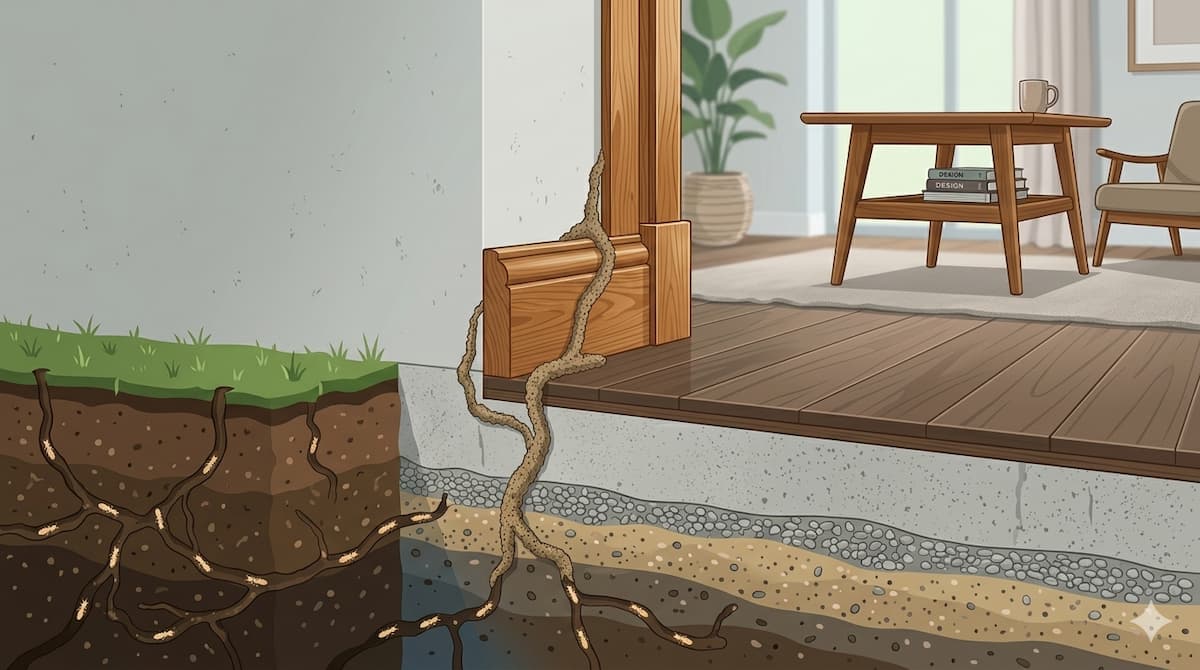
    • Mud Tubes (Galleries): Pencil-thin, dried brown mud tunnels physically constructed on exterior walls, concrete foundations, or climbing up wooden furniture legs to protect foraging termites from light and dry air.
    • Hollow-Sounding Wood: Firmly tap your wooden door frames, baseboards, and heavy furniture with a hard tool. A distinct, papery, hollow sound strongly indicates severe internal cellulose excavation by a hidden termite colony.
    • Swarmers (Alates): Hundreds of winged, reproductive termites suddenly emerging from baseboard cracks, almost exclusively during the humid Indian monsoon, swarming frantically around indoor light fixtures.
    • Wood Dust (Frass): Small, unexplained piles of fine, granular, sawdust-like fecal pellets distinctly accumulating directly beneath wooden items or small pinpoint exit holes.

    Environmental Fact: These specific visual signs are mostly prevalent in Indian homes immediately during and after the heavy monsoon season, primarily isolated at ground level or exactly where wooden framing physically contacts moist masonry or raw soil.

    What is the difference between pre-construction and post-construction termite treatment?

    There are two entirely different methodological approaches to defending a brick-and-mortar structure against subterranean termites:

    1. Pre-Construction Termite Treatment

    This proactive methodology is executed exclusively before a new building’s foundation is poured and finished:

    • The bare soil directly below and surrounding the external foundation trenches is heavily saturated with an organophosphate termiticide like Chlorpyriphos.
    • This establishes an unbroken, highly toxic, continuous chemical barrier that soil-foraging termites fundamentally cannot cross.
    • It is universally considered the most effective, permanent, and long-lasting form of structural termite protection available.

    2. Post-Construction Termite Treatment

    This reactive methodology is executed after you are already actively living inside the completed building (the situation for 95% of homeowners):

    • Deep holes are mechanically drilled continuously around the entire structural perimeter (both inside and outside), and chemical termiticide is aggressively injected under high pressure deep into the soil directly next to the foundation wall.
    • Highly vulnerable wooden elements, particularly ground-floor door frames and window sashes, are also physically drilled and chemically injected.
    • While substantially more labor-intensive and potentially less uniform than pre-construction methods, it acts as a highly effective critical intervention.

    When can homeowners self-treat termites, and when should they hire professionals?

    Chemical termiticides are highly toxic, and deciding whether to DIY or hire an expert depends solely on the mathematical scale of the termite infestation.

    Treatment Scenario Key Required Indicators Recommended Action
    Localized / Early Attack Infestation is strictly limited to 1-2 distinct wooden items (e.g., a single door frame). Mud tubes are highly localized, physically small, and recently built. DIY Spot Treatment (Utilizing Chlorpyriphos with strict PPE compliance).
    Widespread / Structural Attack Multiple mud tubes across diverse interior walls or traversing multiple floors. Core structural beams or widespread furniture sounds deeply hollow. Visible swarms of winged termites indoors. Hire Professional Pest Control (Requires specialized high-pressure drilling and injection equipment).

    Why is Lethal 20% EC (Chlorpyriphos) widely utilized against termites?

    Lethal 20% EC contains the active ingredient Chlorpyriphos, a historically well-known, highly potent, broad-spectrum organophosphate insecticide and termiticide.

    • It physically excels as a deep soil-drenching chemical applied directly around structural masonry foundations to create a lethal subterranean barrier.
    • It serves dual duty and can be explicitly formulated to spot-treat dense wood that remains in direct physical contact with concrete masonry or raw soil.
    • It inherently possesses a notoriously harsh, strong chemical odor, which acts as a built-in safety mechanism, making it immediately obvious exactly when and where the active chemical has been applied inside a home.

    Buy Lethal Chlorpyriphos 20% EC

    How do you correctly dilute and apply Lethal 20% EC for termites?

    Mandatory Disclaimer: You must always read and explicitly follow the specific chemical label on your purchased pack. The technical guidelines below are standard industry practices but the manufacturer’s label is the ultimate legal authority.

    Procedure 1: Soil Drenching Around Heavy Foundations

    Objective: To create an unbroken, lethal chemical subterranean barrier stopping termites from traveling upward from the soil.

    1. Physically dig a narrow continuous trench (approximately 15–30 cm deep) directly along the exterior wall exactly where the termites are visibly entering the structure.
    2. Carefully mix the officially recommended volume of Lethal 20% EC into clean water (a standard agricultural baseline is often 20-25 ml per 1 litre of water; verify this on your specific bottle).
    3. Slowly and evenly pour the highly diluted chemical solution continuously along the open trench, ensuring the exposed sub-soil becomes heavily saturated.
    4. Immediately backfill and firmly tamp the trench with the chemically treated, excavated soil to seal the barrier.

    Procedure 2: Spot-Treating Door Frames and Wooden Members

    Objective: To aggressively chemically stop termites traveling internally upward through wood that touches raw masonry or concrete floors.

    1. Use a power drill to bore small, angled 45-degree downward holes into the lower 12 inches of the wooden door frame or vulnerable wooden member.
    2. Utilize a specialized chemical syringe or a tiny focused funnel to persistently inject the diluted Chlorpyriphos solution deep into each drilled hole until the internal wood matrix is completely chemically saturated.
    3. Once fully dried, permanently seal the open drill holes with standard wood putty or chemical resin.
    4. Critically, you must also heavily treat the immediate adjacent soil or concrete cracks precisely at the base where the wooden frame physically touches the floor.

    Essential Chlorpyriphos Home Safety Protocols:

    • Lethal 20% EC is an aggressive technical-grade agricultural product, absolutely not a casual household aerosol spray.
    • Mandatory PPE: You must always wear thick, chemically-resistant nitrile gloves, an activated-charcoal respirator mask, and protective splashing safety goggles during mixing and application.
    • Absolute Isolation: Do not allow children, pregnant women, or household pets within 50 feet of the treated areas until all wet chemical surfaces have completely physically dried and the harsh organophosphate odor has thoroughly dissipated through physical cross-ventilation.
    • Exposure Protocols: Strictly avoid any bare skin contact; if incidental contact occurs, aggressively wash the area immediately with harsh soap and massive volumes of flowing cold water. Never eat, drink, or smoke while handling organophosphates.
    • Storage: Store the tightly sealed concentrated chemical bottle in a highly secure, physically locked location utterly isolated from all human food, medical supplies, and localized water sources.

    What are the best natural and preventive ways to reduce indoor termite risk?

    Applied chemical termiticides are exponentially more successful when intelligently combined with preventative structural building and physical furniture practices:

    • Always maintain physical air gaps—keep heavy wooden furniture completely pulled away from direct resting contact against damp interior masonry walls and wet concrete floors.
    • Immediately hire plumbers to fix active internal pipe leaks and poor exterior drainage pooling that systemically keeps lower walls and sub-floors chronically damp.
    • Absolutely avoid stacking raw, untreated wooden planks or wet cardboard boxes directly on floors inside dark, unventilated basements or closed ground-floor storerooms.
    • Only construct new interior furniture using chemically pressure-treated, adequately kiln-seasoned hardwood.

    Summary: A practical, professional plan to protect your home from termites

    1. Vigilantly Inspect: Routinely check baseboards and hidden corners for definitive mud tubes, structurally hollow wood, and unexplained fine sawdust.
    2. Diagnose the structural scale: Honestly access if this is a minor, local surface issue versus a widespread, deeply embedded structural disaster.
    3. Deploy Targeted Chemicals: Responsibly utilize Lethal 20% EC (Chlorpyriphos) for aggressive local soil and wood-injection treatments, strictly following required PPE safety mandates.
    4. Defer to Experts: Immediately contract professional, licensed exterminators for any large-scale, multi-room, or chronically repeated subterranean infestations.
    5. Harden the Structure: Permanently strengthen the physical envelope of your building by installing vastly superior exterior water drainage, upgrading to pre-treated wood, and systematically eliminating all direct wood-to-soil contact.
  • FAQ: How Long Does Kokron Gel Take to Kill Cockroaches?

    TL;DR: How fast does Ultimas Kokron Super Gel actually work?

    Unlike chemical aerosol sprays, Ultimas Kokron Super Gel is purposefully formulated not to kill cockroaches instantly on contact. Instead, the gel acts over an optimal 3-7 day period utilizing a devastating biological “domino effect”. Roaches consume the Fipronil-based bait, safely return to their hidden nest, and systematically spread the lethal poison throughout the colony via shared droppings and physical contact, completely eliminating the entire infestation at its source.

    Why don’t cockroaches die immediately after eating the gel bait?

    Most Indian homeowners expect pest control products to instantly drop a cockroach exactly like a heavy aerosol chemical spray. However, professional-grade gel baits are biologically engineered with a completely different objective in mind:

    • They use slow-acting systemic poisons: Active ingredients like Fipronil (0.5%) are specifically designed with a delayed mortality mechanism.
    • They guarantee nest penetration: The delay provides the poisoned cockroach with sufficient time and energy to physically return deep into the inaccessible structural nest.
    • They maximize secondary transmission: This specific biological delay allows the primary poisoned insect to physically interact with, and thus fatally infect, dozens of other hidden colony members.

    Professional Insight: If a cockroach died within minutes of eating the bait, you might feel a brief moment of short-term satisfaction, but the massive hidden breeding nest would remain entirely alive, untouched, and actively reproducing behind your walls.

    How long is the timeline until I see fewer cockroaches?

    When applying a professional gel bait system, you must adjust your expectations from “instant death” to “total colony collapse”. A typical successful eradication timeline follows this precise schedule:

    • Days 1-2 (The Feeding Phase): Foraging cockroaches actively locate and consume the gel dots. You will likely still see normal or slightly increased nocturnal roach activity as they scavenge the bait.
    • Days 3-5 (The Initial Collapse): Visible adult numbers begin to drop sharply as the primary poisoned roaches expire deep within hidden structural voids.
    • Days 7-10 (The Secondary Kill): Major population reduction is achieved. You will typically only observe very sluggish, dying stragglers or highly disoriented nymphs.
    • After Day 10 (Maintenance): A few rare survivors or newly hatched nymphs from previously laid egg cases (ootheca) may appear. Re-apply tiny gel dots in key areas if these stragglers are spotted.

    What is the cockroach “domino effect” (secondary kill)?

    The “domino effect”—scientifically referred to as delayed secondary toxicity or secondary kill—is the fundamental mechanical reason why modern gel baits are vastly superior to surface sprays.

    Step-by-step breakdown of the domino effect:

    1. A single foraging adult cockroach ingests a tiny fraction of the Ultimas Kokron Super Gel.
    2. The toxic target returns to the dark, crowded nest where it continually interacts with nymphs and other non-foraging adults.
    3. Because cockroaches are inherently coprophagic (they eat feces), the nesting roaches readily feed on the primary roach’s toxic droppings, toxic saliva, or eventually its poisoned carcass.
    4. These secondary roaches invariably ingest a lethal dose of the active ingredient and expire.
    5. This devastating biological chain reaction repeats continuously, spreading the poison geometrically far beyond the original roach that directly found the bait.

    This cascading mechanism is exactly how applying a few strategically placed pea-sized dots of gel can entirely eradicate massive, hidden infestations over a matter of days.

    Buy Ultimas Kokron Super Gel (Cockroach killer)

    How should I correctly apply Kokron Gel for the fastest possible results?

    To ensure maximum bait ingestion and the fastest timeline to a roach-free kitchen, you must apply the product exactly like a trained pest control operator.

    The 5-Step Professional Application Procedure:

    1. Aggressive Pre-Cleaning: Thoroughly remove organic food residues, loose crumbs, and heavy oil splatters from all countertops and beneath the main stove area. Never utilize harsh chemical cleaners or insect sprays immediately prior to gel application.
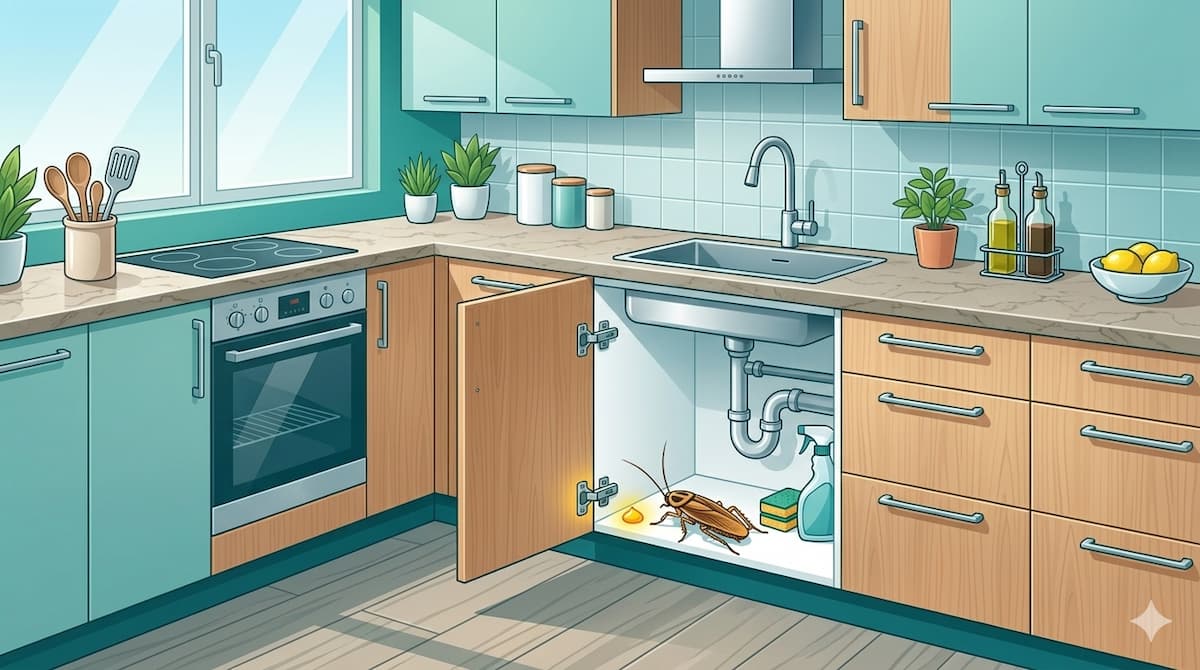
    2. Strategic Dot Placement: Apply precise, tiny pea-sized spots directly inside deep cracks, dark corners under the primary sink plumbing, heavily along the warm backside of the refrigerator, and deeply around metal cabinet hinges. Strictly avoid placing bait on exposed, easily wiped preparation surfaces.
    3. Focus on Critical Micro-Environments: Prioritize dark, exceptionally warm, and highly moist areas. The compressor motor of the refrigerator and the primary drain pipe cabinet are prime targets.
    4. Avoid Bait Contamination: Do not sweep, aggressively wet-clean, or spray any chemical aerosols directly over the applied gel spots. You must let the roaches feed completely undisturbed.
    5. Consistent 10-Day Monitoring: Actively track the number of roaches you observe nightly. Reapply fresh gel strictly in confirmed high-traffic corridors if the population decline prematurely plateaus.

    Why is it critically important NOT to use chemical sprays near the gel?

    Simultaneously using both traditional aerosol knockdown sprays and gel baits is the most common homeowner mistake and completely sabotages the eradication process.

    • Aerosol sprays contain harsh chemical propellants and strong repellents that will actively terrorize cockroaches away from the treated zone, preventing them from structurally finding the bait.
    • The physical liquid spray will permanently contaminate the bait matrix, rendering it unpalatable or entirely washing it away before the roaches can physically consume it.
    • Sprays instantly kill the foraging roaches, completely preventing the crucial “domino effect” from reaching the hidden nest.

    Golden Application Rule: If you feel you absolutely must utilize a contact spray for an emergency outdoors, ensure you use it exclusively in distant rooms where you have not applied any gel bait. Never spray near the kitchen cracks and dark corners where the gel is actively working.

    How much Kokron Gel should I use in a typical Indian home kitchen?

    Applying massive globs of gel does not speed up the process. Utilizing many small, strategically placed dots is mathematically far superior.

    Infestation Level Visual Indicators Recommended Gel Application
    Light Infestation Observing only 1-3 roaches randomly during late night. 10-15 total pea-sized dots spread strategically across key kitchen nesting hot-spots.
    Moderate Infestation Regularly observing 4-10 roaches whenever entering the kitchen at night. 20-30 total pea-sized dots, focusing heavily underneath appliances and deep sink corners.
    Severe Infestation Roaches visibly scavenging during broad daylight; strong musty odor in cabinets. 30+ tiny dots aggressively applied in every crack, combined with strict daily hygiene and frequent reapplication.

    Essential Residential Gel Bait Safety Guidelines:

    • Apply toxic gel bait exclusively in tight structural cracks, deep voids, and directly behind heavy appliances where it is physically impossible for young children and household pets to reach.
    • Never apply gel bait directly onto open cooking surfaces, dining plates, or inside utensil storage drawers where cross-contamination could occur.
    • Thoroughly wash your hands with strong soap immediately after applying the gel syringe.
    • Store the chemical syringe securely in a dry, room-temperature location that is fully out of direct sunlight and completely isolated from all human food supplies.

    Summary: Setting Realistic Expectations for Pest Control

    When you correctly deploy Ultimas Kokron Super Gel in your home:

    • Absolutely do not anticipate instant insect mortality identical to a repellent aerosol spray.
    • Expect a massive, highly noticeable population reduction within a clear 3-7 day biological window.
    • Actively support the gel’s efficacy by upgrading daily sanitation and sealing obvious structural wall gaps.
    • Proactively maintain a few fresh gel spots in historically high-risk plumbing areas as a permanent preventative barricade.

    Absolute patience, mathematically precise bait placement, and strictly prohibiting the competing use of aerosol sprays are the absolute definitive keys to securing and maintaining a permanently cockroach-free Indian kitchen.

  • The Professional Guide to Cockroach-Free Kitchens

    The Professional Guide to Cockroach-Free Kitchens

    TL;DR: Why do you still see cockroaches after spraying?

    If you see a single cockroach, there are usually dozens more hiding deep in cracks, drains, and behind appliances. Traditional aerosol sprays only kill the insects you directly hit, while gel baits like Ultimas Kokron Super Gel are designed to reach deep into the hidden nests. To achieve a truly cockroach-free kitchen, you must combine strict hygiene, physical gap sealing, and strategic gel-bait placement.

    Why do cockroaches keep coming back in Indian kitchens?

    Many Indian households continuously spray chemical aerosols or physically swat cockroaches, only to find the insects returning within days. This recurring infestation happens because kitchen cockroaches exhibit specific survival behaviors:

    • They systematically hide in narrow structural cracks, open drains, and deep inside the housing of warm appliances.
    • They preferentially nest in dark, warm, and highly moist micro-environments, such as under the main sink cabinet and behind the refrigerator compressor.
    • They are strictly nocturnal foragers, coming out mainly at night to scavenge for food, and immediately retreating to the nest before daylight.

    Surface sprays and hit-and-kill methods purely affect the fractional percentage of roaches walking outside at that exact moment. The core breeding colony, safely hidden inside the walls or behind cabinets, remains completely untouched and continues to reproduce.

    How big is a “hidden” cockroach infestation?

    Professional pest control operators adhere to a fundamental rule of thumb: for every single cockroach you see, at least 10 more are actively hiding. While the exact mathematical ratio varies, it illustrates a critical truth: visible roaches are merely the tip of the pest iceberg.

    Critical signs you have a severe hidden infestation:

    • Accumulations of small, black, pepper-like droppings heavily concentrated in shelf corners and underneath the sink.
    • A distinct, pungent, musty, and oily odor emanating from closed, dark cabinets.
    • Hard, pill-shaped egg cases (technically called ootheca) physically glued into wood joints or cracks.
    • Roaches actively scavenging during broad daylight (a guaranteed indicator of extremely high population pressure forcing them out of the nest).

    Why do normal aerosol sprays fail in modern kitchens?

    Traditional aerosol sprays and chalk lines have three major systemic failures when utilized in modern kitchen environments:

    1. They physically cannot reach the nest: Roaches living deep inside crevices will never come into contact with the superficially sprayed surfaces.
    2. They create severe contamination risks: Chemical overspray easily settles indiscriminately on food preparation counters, open storage containers, and everyday eating utensils.
    3. They trigger behavioral avoidance: Over-using the exact same repellent aerosol spray teaches the surviving roaches to fundamentally avoid treated areas, reducing chemical effectiveness over time.

    Expert Tip: This is precisely why modern pest professionals now exclusively prioritize targeted gel-baiting inside sensitive food preparation kitchens, relegating aerosol sprays to non-food areas or utilizing them strictly as a final, localized supplement.

    How do gel baits like Ultimas Kokron Super Gel actually work?

    Unlike repellent sprays, gel baits are chemically engineered to be actively sought out, eaten by cockroaches, and subsequently carried straight back to the hidden nest.

    Key operational advantages of gel bait:

    • They emit exceptionally low chemical odor and can be applied with pinpoint precision in highly targeted spots.
    • Roaches consume the gel voluntarily and unintentionally share the active ingredient (like Fipronil 0.5%) throughout the colony via feeding and physical contact.
    • The cascading “domino effect” guarantees that one specifically treated roach possesses the chemical capacity to kill many others.

    The Cockroach “Domino Effect” Explained:

    1. A foraging cockroach locates and ingests a small localized dot of the toxic gel bait.
    2. The infected cockroach returns to the hidden nest and naturally physically interacts with other colony members.
    3. Other roaches subsequently feed on the infected roach’s highly toxic droppings, saliva, or the residual gel carried on its legs and body.
    4. The entire structural colony completely collapses over an agonizing period of days, rather than instantly, continuously spreading the poison.

    This biological delayed reaction is exactly why you might still observe sluggish cockroaches for 4-5 days immediately after applying the gel—the product is working systematically inside the colony instead of just rapidly killing the few you can visibly see.

    Buy Ultimas Kokron Super Gel (Cockroach killer)

    Where exactly should you place gel bait in an Indian kitchen?

    Strategic physical placement is exponentially more important than applying a massive volume of gel. Cockroaches inherently prefer to travel strictly along edges, baseboards, and protected structural routes.

    High-value strategic spots to place gel bait dots:

    • Underneath and directly behind the refrigerator (specifically targeting the warm back panel and the lower base motor).
    • Deep inside and underneath the main sink cabinet, focusing heavily around the drainage pipes and dark rear corners.
    • Along the internal metal hinges and dark back corners of all lower storage cabinets.
    • Proximity targeting near main floor drains, but strictly avoiding direct contact with flowing or pooling water.
    • Directly behind heavy heat-generating appliances like microwave ovens, gas stoves, and water purifiers.

    Correct Application Method: Apply precise, tiny pea-sized dots roughly every 30–40 cm systematically along edges or directly inside potential hiding cracks. Strictly avoid applying massive continuous lines or oversized blobs—many mathematically spaced small dots are vastly superior.

    Hygiene and Sealing: The essential partners to gel-baiting

    Even the most technologically advanced Fipronil gel will structurally struggle to eradicate a colony if the kitchen environment simultaneously provides unlimited alternative food sources and secure physical shelter.

    Simple Daily Kitchen Hygiene Checklist:

    1. Strictly refuse to leave dirty, unwashed dishes soaking in the sink overnight.
    2. Immediately wipe away fresh oil splatters and organic food spills, paying special attention to the often-ignored area underneath the gas stove.
    3. Aggressively store all raw grains, flours, and loose snacks inside hermetically sealed, airtight containers.
    4. Religiously empty the organic dustbin every single night and ensure the primary lid remains tightly closed throughout the day.

    Structural Sealing Checklist:

    1. Permanently seal structural gaps around drainage pipes utilizing waterproof silicone caulk or hardened cement.
    2. Immediately repair or replace broken ceramic tiles where small roaches can readily utilize the voids to hide.
    3. Professionally install tight metal mesh on exhaust vents and open windows to drastically reduce external entry points.

    Comparing Aerosol Sprays vs. Gel Bait for Kitchen Cockroaches

    Control Method Primary Advantages Primary Disadvantages Optimal Use Case Location
    Aerosol Spray Extremely fast visual knockdown of visible roaches. Completely misses hidden nests; massive chemical contamination risk. Non-food areas, exterior perimeters, immediate spot emergencies.
    Gel Bait Penetrates and systematically destroys hidden colonies; provides long-term control. Slower visible cessation of roaches; strictly requires correct placement. Inside kitchens, deep under sinks, inside food pantries and cabinets.

    Essential Kitchen Cockroach Bait Safety Protocols:

    • Apply toxic gel bait exclusively in deep cracks and hidden structural voids, never on open, exposed preparation surfaces where raw food is actively handled.
    • Keep young children and household pets strictly away from freshly treated baseboards or cabinet hinges until the gel is inaccessible.
    • Do not apply gel bait onto excessively hot surfaces (like directly on the stove body) or strictly where it will be washed away by routine wet cleaning.
    • Never simultaneously mix or spray chemical aerosols near applied gel bait—the harsh aerosol chemical repellents will actively deter the roaches from voluntarily eating the required gel.

    Summary: The professional path to a permanently cockroach-free kitchen

    To definitively clear a chronic cockroach infestation from an Indian kitchen environment, you must follow these sequential steps:

    1. Acknowledge the biological reality that visible roaches unequivocally represent a massive, structurally hidden colony.
    2. Aggressively improve daily sanitation hygiene and permanently seal critical structural cracks and exterior entry points.
    3. Completely transition away from indiscriminate spraying and implement highly strategic gel bait placement.
    4. Maintain absolute patience—expect a slow, gradual, but permanent decline in the visible population over 7–14 days as the internal colony systematically collapses.
    5. Proactively maintain a negligible amount of fresh gel bait in known high-risk structural spots as a continuous preventive measure.
  • UPL SAAF: The Only 2-in-1 Fungicide Your Home Garden Needs

    UPL SAAF: The Only 2-in-1 Fungicide Your Home Garden Needs

    TL;DR: Why is UPL SAAF highly recommended for Indian home gardens?

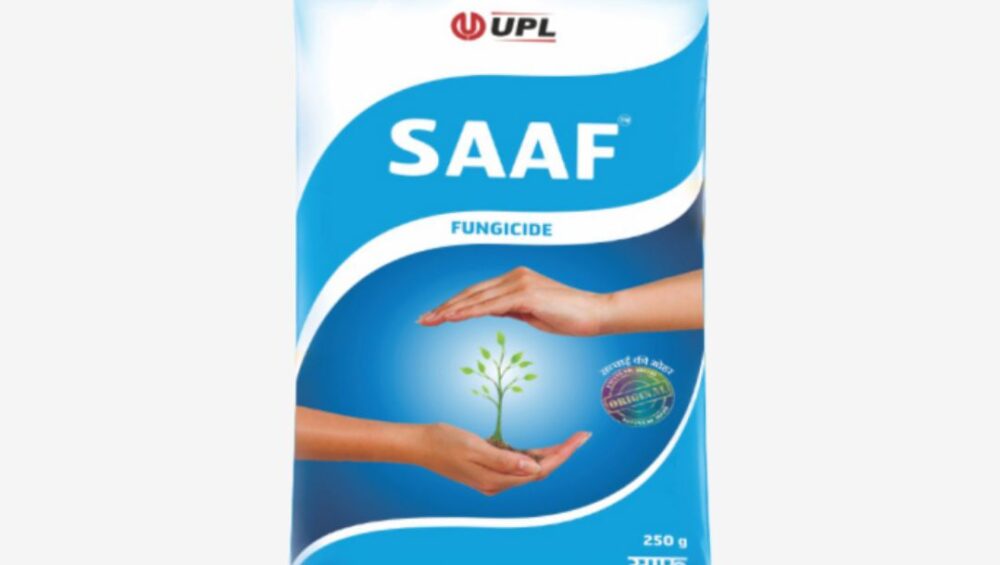
    UPL SAAF (Carbendazim 12% + Mancozeb 63% WP) is a highly effective, dual-action agricultural fungicide that provides both systemic internal healing and contact surface protection. It is one of the most efficient treatments for eradicating Leaf Spot, Powdery Mildew, and early blights on roses, tulsi, bhindi, tomatoes, and chillies using a single, versatile product.

    What makes UPL SAAF different from ordinary contact fungicides?

    Most traditional agricultural fungicides operate in only one way: they are either strictly systemic or strictly contact-based. This technological limitation forces Indian gardeners to choose between two incomplete solutions:

    • Systemic Fungicides: Move inside the plant’s vascular system to kill existing internal infections but offer weaker external protection against landing spores.
    • Contact Fungicides: Coat the external leaf surface to prevent new spores from germinating but cannot reach or cure fungi that have already penetrated the vegetative tissue.

    UPL SAAF successfully solves this problem by uniquely combining two proven active ingredients into a single wettable powder (WP):

    • Carbendazim (12%): A highly effective systemic fungicide component that quickly enters the plant to halt existing fungal growth.
    • Mancozeb (63%): A broad-spectrum contact fungicide component that forms a protective, weather-resistant chemical shield on the leaf’s surface.

    Golden Rule of Dual-Action Fungicides: The synergistic “2-in-1” formulation of Carbendazim and Mancozeb makes UPL SAAF the preferred first-response treatment for concurrently preventing and curing severe fungal outbreaks in humid Indian climates.

    Buy UPL SAAF (Carbendazim 12% + Mancozeb 63% WP)

    Which specific garden plant diseases does UPL SAAF treat?

    UPL SAAF is incredibly versatile and officially approved for a wide variety of horticultural and agricultural crops. In Indian home gardens and terrace setups, it is heavily relied upon to eradicate the following common fungal pathogens:

    Fungal Disease Type Common Plant Symptoms Primary Host Plants in India
    Leaf Spot & Blight Brown and black necrotizing spots with characteristic yellow halos Tomatoes, chillies, brinjal, and tulsi
    Powdery Mildew Distinct powdery white fungal mycelium coating the upper leaves Roses, hibiscus, bhindi, and gourds
    Plant Rusts Orange or rust-colored reproductive pustules forming on leaf undersides Numerous flowering and ornamental species

    How do you calculate and mix the correct UPL SAAF dosage?

    Precision is critical when mixing agricultural chemicals. For small-scale home gardeners, calculating the exact grams per litre ratio is essential to avoid chemical leaf burns (phytotoxicity) while ensuring the fungicide dose remains lethal to targeted pathogens.

    Standard Mixing Guidelines:

    1. The scientifically recommended dosage is exactly 2 grams of UPL SAAF per 1 litre of clean water for most garden applications.
    2. If you are utilizing a standard 15-litre agricultural backpack sprayer, you will need exactly 30 grams of UPL SAAF powder.
    3. Preparation Step: Always mix the dry SAAF powder with a tiny amount of water first to create a smooth, lump-free paste. Once the paste is fully dissolved, top up your sprayer with the remaining volume of water.

    How and when should you spray UPL SAAF for maximum effectiveness?

    Applying the fungicide at the correct time of day and with the proper spraying technique ensures the maximum amount of active ingredient is absorbed by the plant foliage.

    • Optimal Timing: Spray during the early morning hours before intense sunlight hits the leaves, or in the late afternoon/early evening when ambient temperatures have cooled down.
    • Application Technique: Always commence spraying from the bottom of the plant and meticulously work your way up. Critically, ensure you thoroughly coat the undersides of the leaves, as this is where fungal spores predominantly attach and germinate.
    • Treatment Frequency: For actively spreading fungal infections, repeat the spray application strictly every 10–12 days. During exceptionally humid, high-risk monsoon weather, maintain a preventive spray schedule every 10–15 days to break the fungal life cycle.

    When should you switch from UPL SAAF to other treatments?

    While UPL SAAF is a highly potent fungicide, specific agricultural diseases require entirely different targeted chemical interventions. UPL SAAF will not cure the following distinct issues:

    • Bacterial Diseases: Conditions such as bacterial wilt or bacterial leaf spot cannot be cured by fungicides. You must utilize specialized agricultural bactericides/antibiotics like Aries Plantomycin to combat these bacterial pathogens.
    • Severe Monsoon Wash-Off: During periods of continuous, heavy monsoon rainfall, systemic fungicides may physically wash away before being appropriately absorbed. In these extreme weather events, rotate your treatment with heavy-duty contact fungicides like Indofil M-45 to maintain a stronger physical surface barrier.

    Buy ARIES AGRO LIMITED PLANTOMYCIN
    Buy INDOFIL M 45 (MANCOZEB 75% WP)

    Essential Fungicide Safety Protocols:

    • Mandatory PPE: Always wear chemically resistant rubber gloves, a protective face mask, and closed-toe shoes when handling, mixing, and dispensing powdered fungicides.
    • Wind direction: Never spray against the wind or during gusty conditions to rigorously avoid chemical inhalation and unintentional drift to non-target plants.
    • Isolation: Keep children and household pets strictly isolated from the sprayed area until the plant foliage has 100% physically dried.
    • Storage: Store the UPL SAAF packet tightly sealed in a cool, dry location completely out of reach of children and entirely separate from food supplies.
    • Post-application hygiene: Thoroughly wash your hands, face, and any exposed skin with soap and clean water immediately after completing the spraying operation.
  • Yellow Spots & Fuzzy Leaves: Fungal Identification Guide

    Yellow Spots & Fuzzy Leaves: Fungal Identification Guide

    TL;DR: How to quickly identify fungal diseases in Indian gardens

    Most fungal problems on Indian garden plants are Powdery Mildew (white powder), Downy Mildew (yellow patches with a fuzzy underside), or Leaf Spot (brown spots with a yellow halo). Identifying the correct disease pattern is crucial. You can save your plants by combining proper airflow with targeted fungicides like UPL SAAF or Indofil M-45, applied at the correct stages of infection.

    What are the most common fungal diseases on Indian garden plants?

    In Indian home gardens and balconies, fungal diseases are the second biggest cause of plant death after improper watering. Warm days, cool nights, and high humidity—especially during the monsoon season—create perfect conditions for fungal spores to germinate and spread rapidly.

    Golden Rule of Fungal Prevention: Fungi thrive when relative humidity stays above 70% and leaves remain wet for many hours (due to overnight dew, rain, or late watering). Watering at the soil level in the morning is your easiest preventive measure.

    The three most common fungal disease patterns you will encounter are:

    • Powdery Mildew: Fine, flour-like white powder on upper leaf surfaces.
    • Downy Mildew: Yellow, angular patches on the top of the leaf with fuzzy grey or purplish mold underneath.
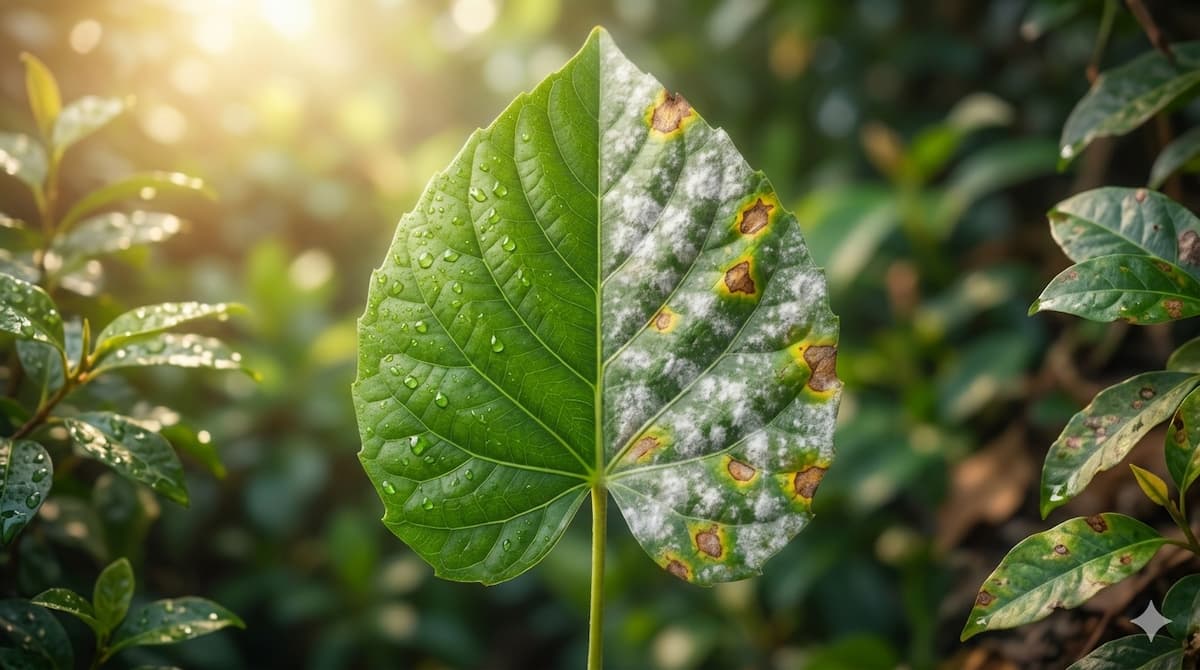
    • Leaf Spot (Cercospora / Alternaria): Brown or black spots surrounded by a distinct yellow halo, sometimes leaving empty “shot holes”.

    How can you identify Powdery Mildew on roses, hibiscus, and bhindi?

    Powdery Mildew is typically the first serious fungus problem new gardeners face. It distinctly prefers dry leaves, good light, and slightly humid air—conditions very common in Indian balcony setups.

    Visual signs of Powdery Mildew:

    • Fine white or grey powder distributed on upper leaf surfaces, appearing like dusted flour.
    • Affected leaves may curl slightly and become physically distorted.
    • Newer, tender leaves and flower buds are predominantly hit first.
    • In severe cases, foliage turns yellow, completely dries out, and drops prematurely.

    Step-by-step treatment for Powdery Mildew:

    1. Remove heavily infected leaves immediately and dispose of them in a sealed trash bag.
    2. Improve airflow by spacing pots wider apart and performing light strategic pruning.
    3. Switch to morning watering directly at the soil level so the plant foliage dries quickly in the sun.
    4. Apply a systemic fungicide if the white powder is spreading uncontrollably across multiple host plants.

    Why does Downy Mildew appear on palak and cucurbits?

    While Downy Mildew is a close relative of Powdery Mildew, its visual symptoms and environmental triggers are distinctly different. The disease moves aggressively fast when nights are cool and leaves stay wet for prolonged periods.

    Visual signs of Downy Mildew:

    • Yellow or light-green patches form on the upper leaf side. These patches are often highly angular because they are trapped by the plant’s internal veins.
    • Fuzzy grey, whitish, or purplish mold grows directly beneath those yellow patches on the underside of the leaf.
    • Left unchecked, affected leaves rapidly turn muddy brown and collapse entirely.

    How do you recognize Leaf Spot on tulsi and money plants?

    Leaf Spot diseases, most frequently caused by Cercospora and Alternaria fungal pathogens, slowly consume the leaf area, weaken the plant’s photosynthesis, and trigger widespread leaf yellowing and dropping. They are heavily prevalent during the humid Indian monsoon.

    Visual signs of Leaf Spot:

    • Multiple small brown, black, or dark purple spots scattered indiscriminately on the foliage.
    • A distinctive yellow or light-green halo ringing each dark fungal spot.
    • In advanced infections, the dead tissue in the center of the spot falls out naturally, leaving empty “shot holes” across the leaf.
    • The infection pattern typically begins on older, lower leaves and climbs upwards towards new growth.

    Powdery Mildew vs Downy Mildew vs Leaf Spot: What is the difference?

    Use this diagnostic table as your rapid identification guide the moment you spot damaged foliage:

    Disease Type Key Visual Sign Common Indian Host Plants Typical Weather Triggers
    Powdery Mildew White, flour-like powder on leaf surface Rose, hibiscus, bhindi, gourds Warm days, cool humid nights
    Downy Mildew Yellow patch on top, fuzzy mold underside Palak, cucurbits, brassicas Cool nights, prolonged leaf wetness
    Leaf Spot Brown spots with a yellow halo, shot holes Tulsi, money plant, climbing creepers High humidity, monsoon, crowded pots

    When should you use fungicides like UPL SAAF and Indofil M-45?

    While proper pruning, spacing, and soil-level watering act as your first line of defense, applying targeted chemical treatments is medically essential once a fungal infection begins actively spreading to secondary leaves.

    UPL SAAF (Carbendazim 12% + Mancozeb 63% WP)

    UPL SAAF combines a systemic fungicide (Carbendazim) with a contact fungicide (Mancozeb). This powerful dual-action approach means it operates as both a curative and a protective solution:

    • The systemic component transports inside the leaf tissue to severely halt existing fungal growth.
    • The contact component acts as an external chemical shield, stopping new fungal spores from successfully germinating on the surface.
    • Highly recommended for treating active Powdery Mildew and Leaf Spot on roses, hibiscus, and tomatoes (Mix 2 grams per 1 litre of clean water).

    Buy UPL SAAF (Carbendazim 12% + Mancozeb 63% WP)

    INDOFIL M 45 (Mancozeb 75% WP)

    Indofil M-45 is a broad-spectrum, contact-only agricultural fungicide that provides excellent surface-level protection.

    • Performs best as a preventive shield applied before diseases reach severe, visible levels.
    • Highly effective for stopping Downy Mildew, early-stage Leaf Spot, and acting as a generalized monsoon protectant for vegetable crops (Mix 2–3 grams per 1 litre of water).

    Buy INDOFIL M 45 (MANCOZEB 75% WP)

    Essential Fungicide Safety Protocols:

    • Always wear basic Personal Protective Equipment (PPE) including gloves, a protective mask, and closed shoes when mixing and spraying agricultural chemicals.
    • Never spray against the wind or during strong gusts to avoid chemical inhalation and environmental drift.
    • Keep children and household pets away from the treated area until the plant foliage is 100% dry.
    • Store all fungicidal products securely in their original, clearly labeled packaging in a cool, dry place strictly out of reach of children.
    • Do not dispose of leftover fungicide suspensions into drains, municipal ponds, or local water sources.

    Final Decision Flow: What should you do right now?

    1. Identify the exact pattern: Look for white surface powder (Powdery Mildew), fuzzy undersides (Downy Mildew), or brown spots with halos (Leaf Spot).
    2. Implement cultural fixes: Immediately pluck off severely infected leaves and optimize pot spacing for airflow.
    3. Select your treatment: Apply UPL SAAF for active infections, or employ Indofil M-45 as a preventive shield against high humidity.
    4. Maintain a schedule: Spray uniformly every 10–15 days during high-risk monsoon periods to break the fungal life cycle.